

I’ve been publishing this newsletter consistently for a long time. Writing it takes real time and energy, and like most independent work, it only survives if readers support it.
If you’ve found value in this series on how cities shape everyday life, consider becoming a paid subscriber. You’ll find a list of every installment in this series at the end of today’s article.
Blueberries—arándanos—are my favorite fruit.
In Los Angeles, they were prohibitively expensive at the “farmer’s market.” So, I’d only buy them “fresh” on sale at the supermarket or frozen from Trader Joe’s.
I have to say—I loved those frozen blueberries. I’d often take a handful, smash them into a near-empty jar of peanut butter, top everything with Greek yogurt, granola, and honey, and enjoy a healthy snack.
Everything tastes better cold, particularly when it doesn’t come fresh.
Throughout my long, sordid history with blueberries, I’ve never tasted blueberries like the ones I buy here at my neighborhood municipal market.
Like pretty much all produce I buy there—I never really knew what fresh or flavor meant until now.
Blueberries here are typically in season in spring through early summer.
As with other produce, the stand I go to several times a week in the market often doesn’t have them. When they do, I sometimes ask where they’re from. On the occasion that they’re not local, they tell me.
When they don’t have them, I don’t buy blueberries. I don’t go to another stand. I don’t resort to the supermarket.
Because I know—based on an accumulation of experiences and conversations with them—that if they don’t have blueberries, they’re either too expensive, not good, or not in season.
And I trust that judgment.
“They” are the mother and daughter who run the stand every day. On the weekend, another daughter—and I think a son—joins them.
One day, I noticed red leaf lettuce. They don’t usually have red leaf lettuce.
I said I wanted it.
One of the daughters told me that “it’s a gift from my father.” He had some left over from their farm, so they brought it to the market.
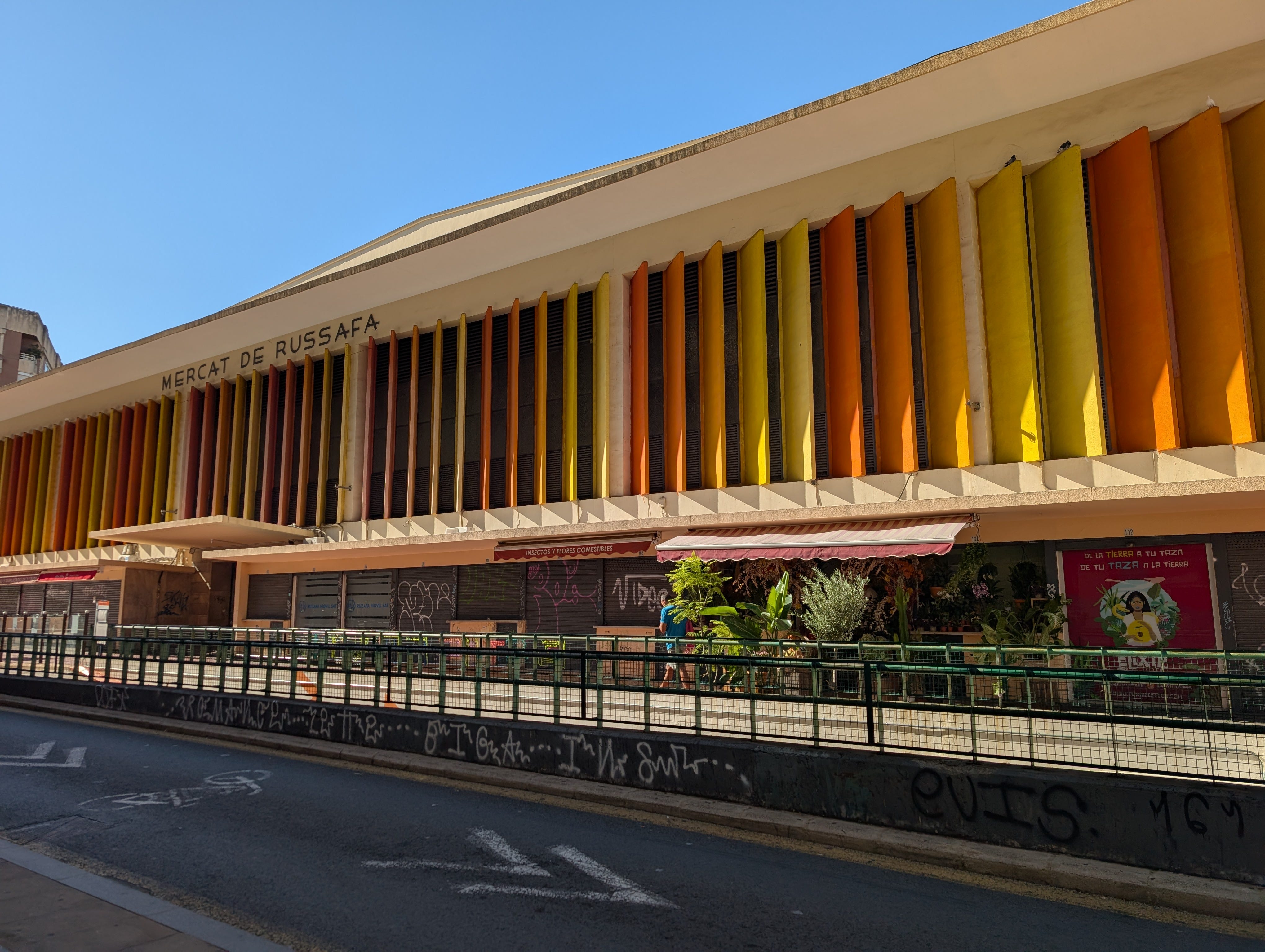
If you grow up in the United States today, this kind of relationship with food—or with the person selling it to you—barely exists anymore.
When I was a kid, my hometown had three or four butcher shops.
Actual butcher shops.
Now, you’re more likely to find someone in a supermarket wearing a white coat behind a counter labeled “meat department,” but they’re akin to a rent-a-cop standing near the door.
The product arrives boxed, pre-cut, and standardized somewhere far away. The person behind the counter isn’t deciding what’s good today. The system already decided that weeks ago.
That’s the difference.
In much of the United States, local and regional food systems collapsed decades ago.
Supermarkets replaced neighborhood food economies. Convenience replaced seasonality and removed quality—freshness. Bad agricultural practices killed flavor.
Now, consumers optimize.
If one place doesn’t have blueberries, you go somewhere else. If they don’t have them either, you open DoorDash or Uber Eats.
Eventually, someone somewhere will have blueberries. Even if they traveled 7,000 kilometers to get to you.
It’s like being in a relationship with a blow-up doll.
Neighborhood markets in Spain operate on a different logic.
If the fruit stand doesn’t have blueberries, there’s usually a reason.
They’re not good that week.
They’re too expensive.
Or they’re simply not in season.
And instead of solving that “problem” by searching for them somewhere else, you just come back another day.
That shift changes your relationship with food and with your community.
It changes your relationship with the people who sell things to you—from everyday purchases to that one-off buy you spent time anxiously researching.
You’re not optimizing a transaction.
You’re participating in a system.
One built on proximity, pride, familiarity, and trust.
When a place works that way long enough, you stop expecting everything, everywhere, all the time.
And you start trusting that if something isn’t there today—
there’s probably a good reason.
Over the last few weeks I’ve been writing a series about how cities shape everyday life—how we move, shop, eat, raise kids, and interact with each other in public space.
In May, the focus shifts from Spain to Paris.
Previous installments in this series:



I think about this quite a bit. On the one hand, I can get bananas up here. In Wisconsin! In January! On the other, there is almost zero rhythm or seasonality to my diet. They only real way to tell time in this context is the rise/fall of prices.
The local connection is a good thing.
There are a lot of markets here in the Franschhoek area; lots of crafts, lots of food stalls, so far we haven’t run across a fruit and veg one.
I certainly don’t have anything more than a transactional relationship with the local supermarkets, even if they are good.
That said, I do have a connection with our nearby cafe. 15 min walk to Cafe del Sol at Val de Vie for their granola, yoghurt and fruit combo. About 6 CHF or USD 7.50. Best breakfast ever as my wife calls it.