

As I touched on last time, when I was a kid, my hometown had three or four butcher shops.
Actual butcher shops.
You walked in. The butcher stood behind the counter. You asked for what you wanted and they cut it for you.
Today, they're between dead and zero.
I wonder how that dynamic has changed where you live.
The place where I was born and raised—Niagara Falls, NY—is dead. It’s not a stretch to say that there’s “nothing” there—sadly.
In other places where I’ve lived before Spain—particularly San Francisco and Los Angeles—butchers and such have become amenities. They’re luxury items. They’re few and far between and generally cost-prohibitive. You’re more likely to find a vegan butcher than a mother and daughter behind a produce stand who will be honest with you about blueberries.
Local food economies no longer exist across much of the United States. Where fragments remain, they’re usually a patchwork of relatively expensive or inconvenient options you have to hack together. Sort of like trying to be car-free in most American cities, towns, and suburbs.
And the two inefficiencies actually tie together.
I remember driving through the Finger Lakes in Upstate New York in 2023.
Beautiful country.
Some semblance of a real system still exists—just not where most Americans live.
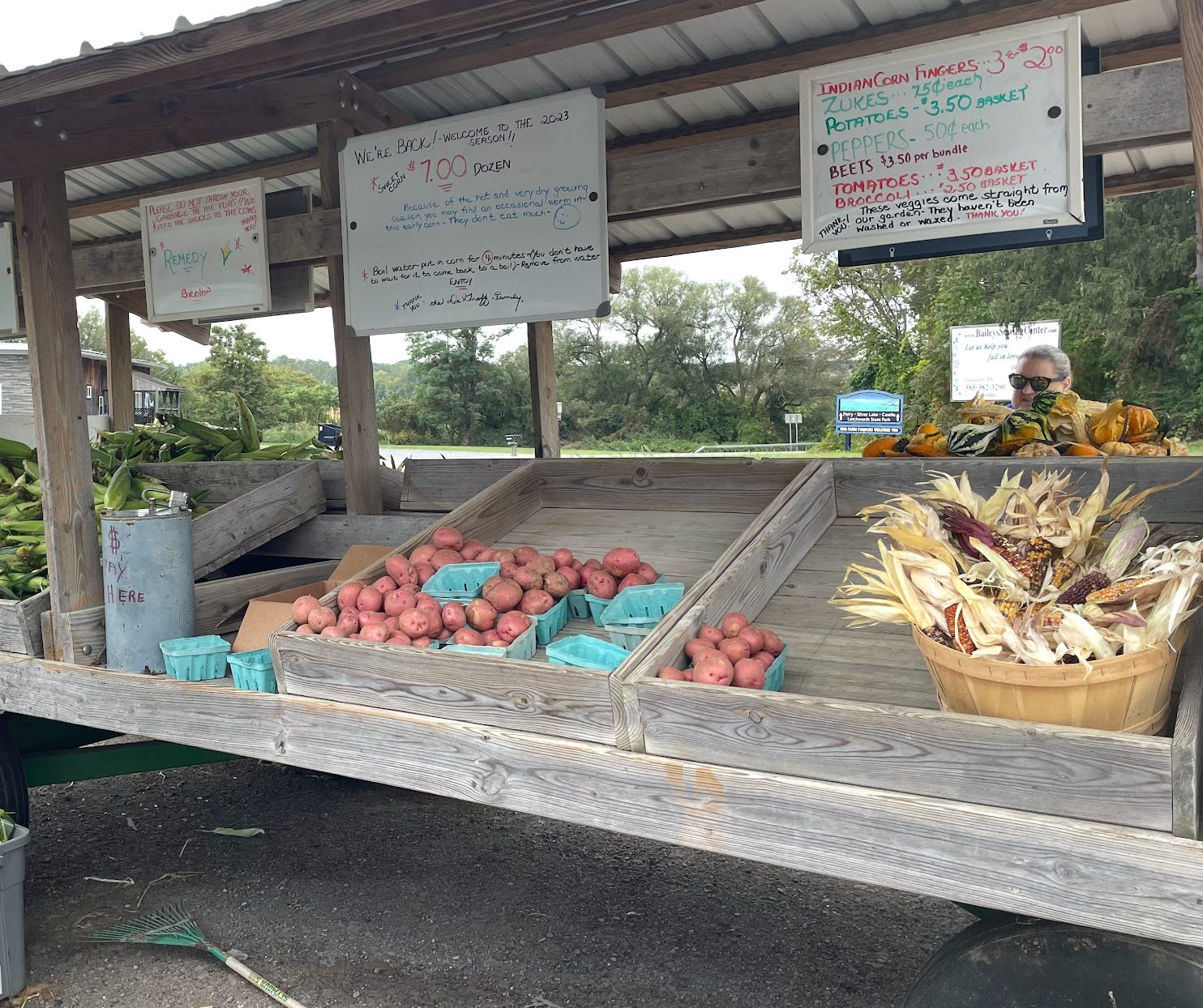
While driving, we stumbled upon a roadside produce stand operating on the honor system.
No cashier.
No card reader.
Just vegetables, a handwritten sign with prices, and a metal container where you dropped cash.
Super cool.
But the moment also illustrated the problem.