

It has been interesting—and, I hope, instructive—to compare some of the things I wrote before my wife and I moved to Spain to how I’m experiencing and how I’m feeling about those things today.
We moved in January 2025. So we’ve been in Valencia for nearly a year and a half.
Wild.
In November 2024, I wrote about what I might miss about Los Angeles.
I branded the whole idea of missing things as pretty much a bullshit concept.
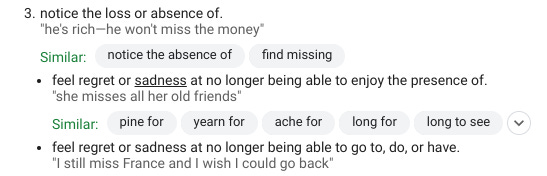
To get there, I compared two definitions central to the discussion:
When you miss, you —
When you feel nostalgia, you —
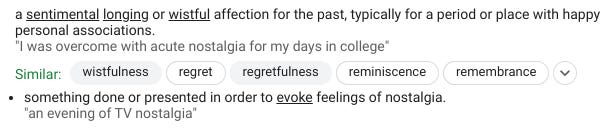
So there’s a distinction that’s easy to lose sight of.
All day long, I’m constantly looking at the dictionary definitions of words we often don’t think twice about using.
In my line of work, I think it’s important.
Because when you lose sight of the distinction between—as one example—miss and nostalgia you fall into a trap that effectively drags discourse into a shallow abyss. In everything from politics to the incessant dialogue around moving abroad, people throw words around absent much, if any consideration of their meaning.
That’s part of why we end up with these basic if/then discussions about moving away from something versus moving towards something or fantastical “scouting trip” searches for some mythical place that replicates what makes you comfortable without tradeoffs. It’s the type of drivel you get from AI if you don’t know how to use it.
With the distinct meanings of miss and nostalgia (or whatever) established, you’re better equipped to have a conversation that goes beyond the empty desire to get views on YouTube or scare someone into paying for your masterclass or relocation course.
In the 2024 article, I came to the conclusion that I wouldn’t miss LA, but I’d feel nostalgia for the city and the state of California that basically turned me into the person I am today:
But I will certainly feel nostalgia — a true appreciation — about living in a state where you have experiences you simply can’t have in other places. Experiences that become so part of your daily life that you can take them for granted.
But you don’t. Because, in a part of the world where an earthquake can strike at any second and where the only constant is change (even if the more things change, the more they stay the same!), you learn to not take things for granted.
I don’t take for granted the fact that my preferred mode of ride sharing has quickly become Waymo’s driverless cars.
Until they arrive in Spain — and they will — I won’t miss, but I will feel nostalgic about driverless cars…
My love of cities sparked several years of urban planning education, which focused on the physical and mental health and social components of urban living.
Those two factors have convinced me that I can take an already good life and make it better in an environment with a culture that revolves around public space and subsequent social interaction and is much, much less about the car. Car culture is one thing I won’t miss — or even feel nostalgia for — after I leave California.
I consider myself an expert in knowing the types of physical environments where I thrive.
So, at a point when I could bask in the glow of having made it in California for more than half of my life, I prefer to take what I learned here and use it to learn a new language, overcome fresh and foreign obstacles and make sense of another culture that has the potential to continue to shape who I am and want to be.
Waymo driverless cars will likely be in Madrid soon. They’re about to hit London.
Do I feel a crazy rush to use them? Not at all.
Because the existence of driverless cars in a handful of US cities is the type of thing that fuels America’s inferiority complex. The US propaganda machine loves to take isolated “advances”—self-driving cars or AI—and hold them up as examples of US innovation and subsequent superiority.
We do the same thing in our personal lives. We fixate on isolated experiences—a favorite bar, a restaurant, a driverless car ride—and give them far more weight than they deserve when evaluating the overall quality of a place or a life
It’s only after you live in another place long enough that you realize technological innovation isn’t a spectacle like SpaceX, it’s actual convenience readily visible in day-to-day life. Like putting your card down on the table to pay in the US rather than—as they’ve been doing in Canada and Europe at least since I was in my late-twenties—tapping a reader that a server brings to your table.
The list could go on, but—take it from me and the endless videos on YouTube—other parts of the world show the United States for what it is: way behind on implementing the technology that could actually make everyday tasks more convenient and improve quality of life for the population. Card readers, high-speed trains—or, just trains, real food at local markets, grocery store amenities, public space, and so on and so forth.
There’s an arc that weaves itself through this conversation.
For example,


Read those after you finish reading this.
If these essays help you think differently about work, money, quality of life, moving abroad, or simply how to build a life that actually fits, consider becoming a paid subscriber.
You can also support the newsletter by opening a Wise account through my referral link. It’s one of the few products I recommend because it’s one of the few products I use almost every day.
Anyway, back to missing things.
One of the places I miss most is a dive bar in Los Angeles called the Frolic Room.
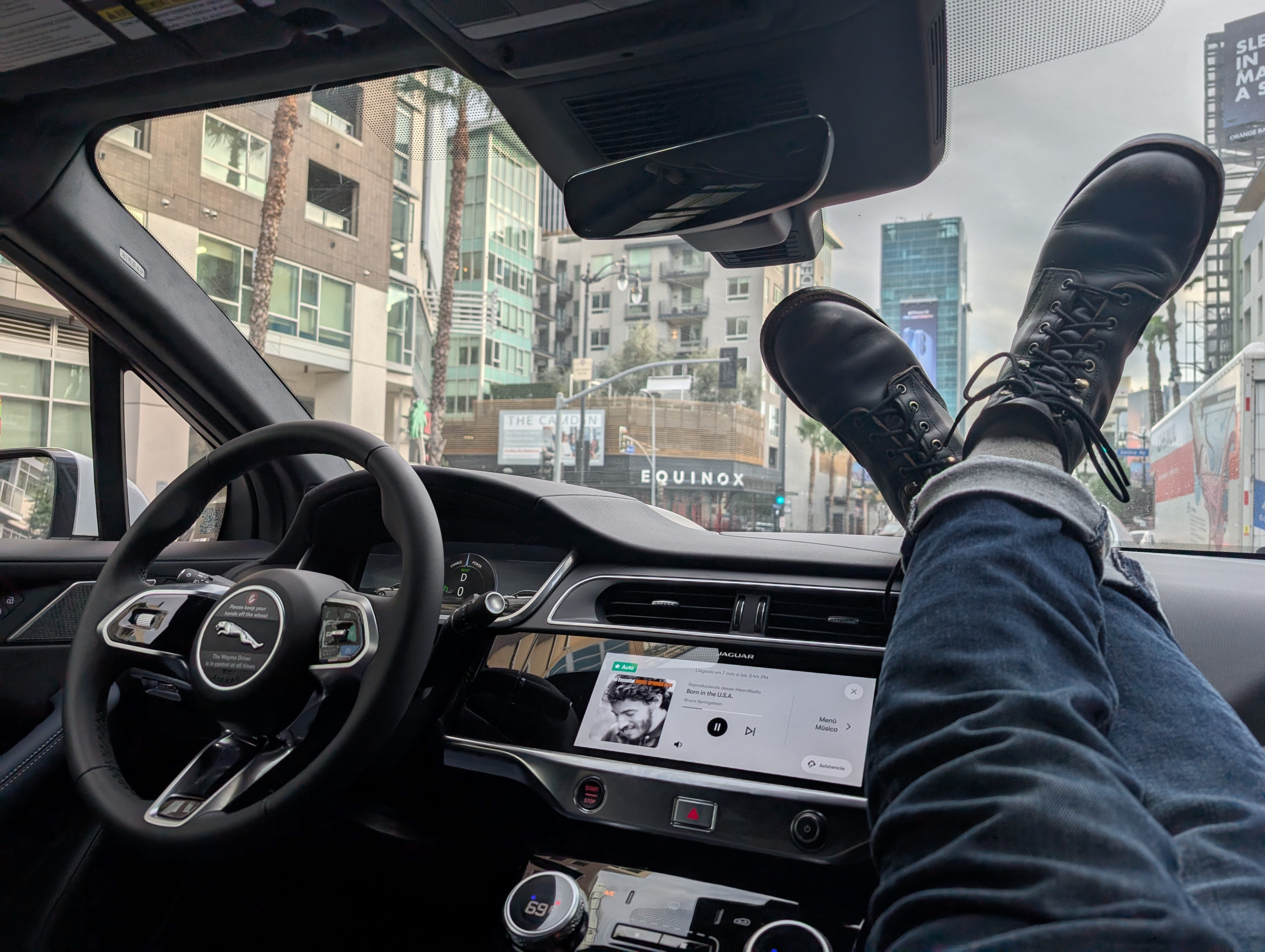
If you've never been there, it's dark, a little grimy, completely unpretentious, and exactly the type of place that’s impossible to explain to somebody who hasn't spent time there. Troy always poured me too much Fernet alongside a cold beer, usually seconds after I walked through the door more than a little stoned from my Waymo ride.
I don’t miss it because it’s objectively better than anything in Valencia.
It isn’t.
I miss it because it belonged to a specific period of my life.
That’s where people often get confused. They mistake nostalgia for evidence. They think missing something means they made the wrong decision.
It doesn’t.
It usually means that a place, a person, or a routine mattered.
The mistake is assuming that because something mattered, you should go back to it. But if you actually open the encyclopedia in your brain, you realize that experiences like drinking in a dive bar are moments in time and—often—forms of escape.
It’s easy to gloss over the fact that I started taking Waymos from our apartment to the Frolic Room because the walk was so dirty, sketchy, and even dangerous. Not being able to walk out your front door and take a 1.3-mile journey on foot and actually feel safe—that’s the type of stuff that matters and persists. And ties back to the discussion from the other day that quality of life is infrastructure, not €3 beers or beach days.


If I moved back to Los Angeles tomorrow, the Frolic Room would still be there.
The problem is that everything else would be there too.
The traffic. The cost of living. The constant feeling that ordinary life requires more effort than it should. And the tradeoffs that caused me to leave in the first place.
That’s what nostalgia conveniently edits out.
It gives you a sizzle reel. But the difference between a good and ordinary life isn’t highlights. It’s the choices you make to structure the many minutes that fill your day-to-day.
I love nostalgia—a lot actually—but it conveniently edits the stories we tell ourselves. In some cases, the resulting psychological mindfuck can lead to bad decisions—or to seeking advice in the middle of a decision from grifters and opportunists who prey on your uncertainty rather than make a genuine effort to explain it.
Nostalgia loves…
The Fernet.
The bartender.
The familiar faces.
The feeling.
But it doesn’t bring you forward in your thinking or in your experience of life.
Many people who move abroad—present company included—do it to learn, to grow, to evolve, to challenge themselves at points in their lives when comfort and the status quo can lead to stagnation. When the challenge appears, it’s easier to mentally fall back on and crave what you know. This is merely a reality of life—with relocating to a different country but one case study. We have a tendency to remember the good parts, but conveniently omit the not-so-good ones.
The part where I was taking a driverless car 1.3 miles because the walk between my apartment and one of my favorite places in the city felt unpleasant enough that I didn’t want to do it.
The part where I accepted things as normal that I no longer consider normal.
The part where daily life required more planning, more money, more effort, and more tolerance for dysfunction than it does now.
That’s the distinction.
I don’t miss Los Angeles.
I feel nostalgia for parts of Los Angeles.
Just like I feel nostalgia for parts of San Francisco.
Just like one day I’ll probably feel nostalgia for parts of Valencia.
If you’re building an interesting life, you’ll leave things behind.
Places.
Routines.
Bars.
Restaurants.
Entire versions of yourself.
That’s the story I’ve been writing for myself since I was 13.
If you never experience feeling nostalgia for any of those things, there’s a decent chance you’ve held yourself back from going anywhere worth going in the first place.
Nostalgia - enjoyed “it” when I was there, would go back and do “it” again. Still happy to be where I am now