

The reason why I didn’t want to make a career out of urban planning directly relates to the reason why quality of life sucks across the United States, relative to much of Europe and the rest of the world.
The United States has effectively brainwashed its people—that would be an overstated cliché if it weren’t true.
Between 1999 and 2006 in San Francisco, I learned this quickly while doubling as an urban planning student and an activist fighting against chain stores, for bicycles, and against war.
Historically, the United States has taken what should be an unacceptable baseline—and is an unacceptable baseline in other parts of the world—and led people who crave change to believe they’re fighting the good fight. Activists were simply dangled carrots in the form of here-and-there, once-in-a-while incremental change.
But that baseline has shifted even further as the country recently took what is—in practice—a complete right turn.
Now, in the US, you’re even more conditioned to accept the unacceptable, discover you’re disenchanted with it, and then feel righteous for offering a little bit of resistance.
It’s like eating a salad topped with gasoline, then celebrating when—one day—the powers that be decide they’re going to let you use olive oil.
Quality of life gets presented to us as Americans similarly.
With a sole focus on GDP, productivity, and the myth of superior convenience and innovation relative to other parts of the world—packaged in what, as it turns out, is just one big inferiority complex—you’re sold a warped idea of what quality of life actually is in practice.
The problem is that quality of life is difficult to measure when you’ve never experienced anything else.
You normalize whatever surrounds you—driving everywhere, sitting in traffic, spending a quarter of your income on a car.
You normalize enormous parking lots and hostility in public (people are just stressed).
Eventually, you stop seeing these things as choices.
They become the reality itself—your reality.
That’s the trick.
The most effective systems don’t merely force compliance. They convince people there is no alternative—and that any alternative goes against their superior way of life.
It’s a mindfuck of the highest order.
That’s why quality of life is such a difficult topic for Americans to discuss.
Most people hear “quality of life” and think it’s some vague lifestyle concept involving beaches, wine, and vacation days.
It’s not.
Quality of life is infrastructure.
It’s geography, transportation, housing, and public space.
It’s how difficult ordinary life feels on an average Tuesday.
Let’s be clear, other parts of the world struggle with some of the same issues. I’m seeing it in Spain where housing sits at the center of many quality-of-life debates. But—as we discussed in reference to gentrification the other day—certain pressures seem inevitable in any capitalist system.

The difference isn’t that Europe somehow solved these problems.
The difference is where the argument starts.
In Spain, people are fighting over housing in cities where large numbers of residents already walk, bike, use public transportation, spend time in public space, and live without needing a car.
In the United States, many people are fighting for those things before they can even begin having the housing conversation.
The baseline is different.
Not perfect. Different.
And that difference matters because quality of life is cumulative. It isn’t one thing. It’s a collection of hundreds of small things that either make ordinary life easier or harder.
There’s a massive difference between having to drive everywhere and deciding whether today is a day to drive, take the train, ride your bike, or walk.
If this kind of analysis resonates with you—if you’re tired of relocation porn, culture-war nonsense, and simplistic explanations for complicated problems—consider supporting the newsletter.
Paid subscriptions help fund the time it takes to think through these ideas, challenge assumptions, and write from lived experience rather than recycle whatever happens to be trending this week.
You can also support the work by opening a Wise account through my referral link. I use Wise every month to manage life between the United States and Europe, and it’s one of the few products I recommend because I genuinely use it myself.
That’s where the quality of life conversations go awry.
Quality of life isn’t beaches or even vacation days.
It’s not some romantic vision of Europe.
It’s whether ordinary life feels unnecessarily difficult.
It’s whether your environment works with you or against you.
It comes down to having options—to having choice. As you can see in real time in Spain, as choices decrease for a meaningful number of people, quality of life decreases for a meaningful number of people. This creates an enormous responsibility for the collective that’s difficult—if not impossible—to fully get your head around.
But, at the baseline with all else equal in a discussion where all else is never equal, the hardest part is that you often don’t realize what’s missing until you’ve experienced something else.
As Americans, we have little to no concept of quality of life until we move—not go on vacation, but live someplace else for long enough. I can tell you this with full confidence after having been through the process over my—almost—51 years on this planet.
For most of us, defining quality of life is like asking a fish to describe water.
We grew up inside the system, so we assume it’s normal.
Only when you step outside it do you realize how many things you always thought were unavoidable were actually all about choices your leaders made for you and choices you never had.
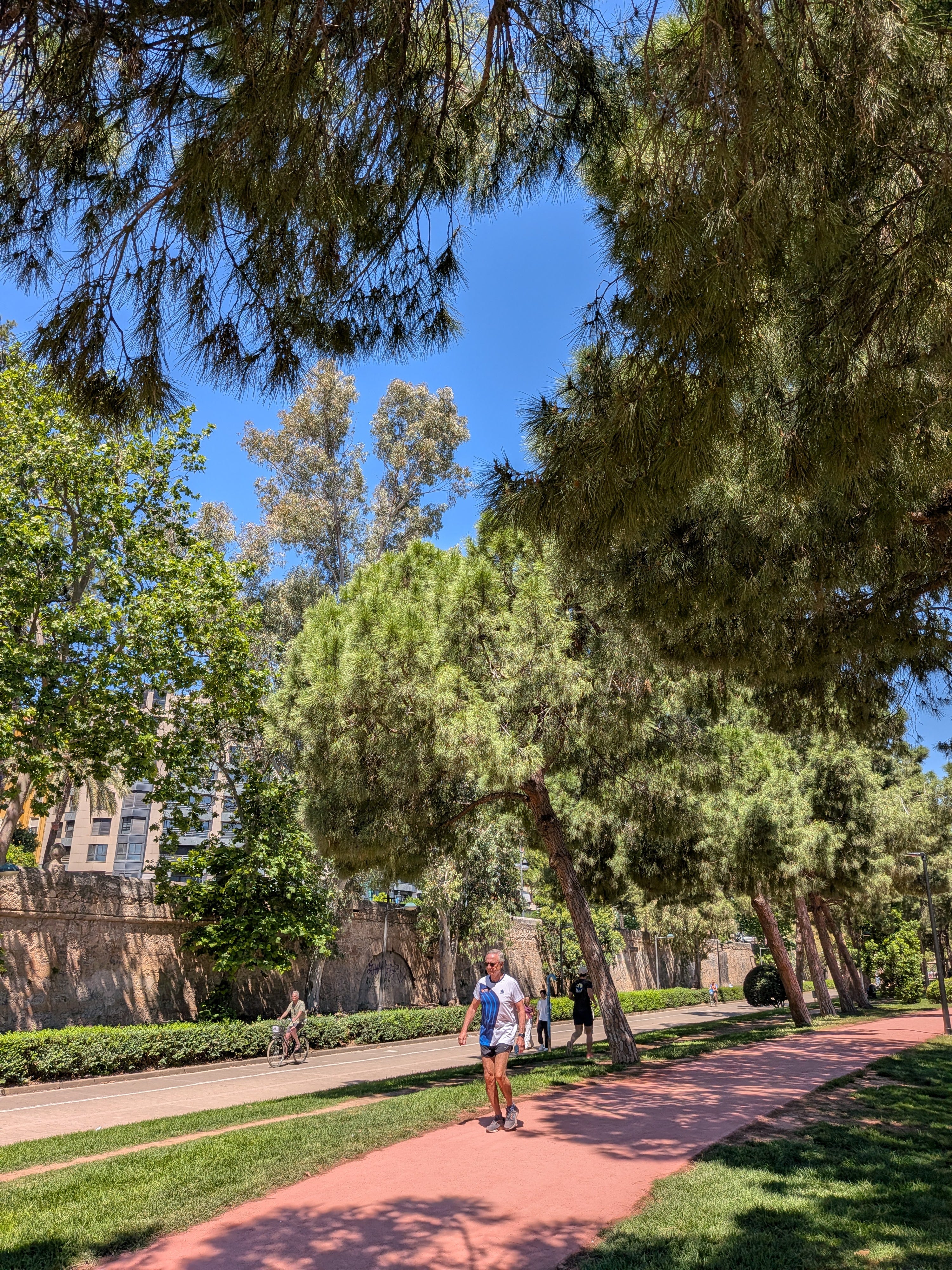
Quality of life is infrastructure.
Love that. And infrastructure is something which takes urban planning; no one person can make that happen on their own.
Infrastructure is also about investing today, making good decisions for the future. Often those won’t look good this quarter and they won’t happen in a way which changes your bonus this year!