

As the year winds down, I’m resurfacing a few pieces that mattered—some popular, some overlooked, some that quietly predicted what life abroad would actually feel like.
Today is the second of two peanut butter posts that use the delicacy to get into so much more.
This post is from earlier this month. It’s one of the first stories to discuss what living abroad actually feels like—at least for me. And how if you treat a lack of familiarity, incompetence, and the discomfort that comes along for the ride as problems to solve, you’re setting yourself up to fail—abroad and in many other big life changes.
Why I’m resurfacing this piece:
I don’t write about life abroad as a fantasy, a checklist, or a crisis to monetize.
I write about what it feels like to stay sharp, curious, and capable when nothing is optimized for you—and no one is trying to sell you a solution.
If you’re interested in that kind of thinking, paid subscriptions are 50% off through the end of the year. Pay in euros and get 30 days free.
From December 4, 2025
Americans love to say you “can’t get peanut butter in Spain.”
Before I finally looked for myself—on an actual supermarket shelf in Spain—I believed this too. Primarily because I was getting my information from the projectors and complainers who populate Facebook Groups.
I was a peanut butter freak in the United States. All kinds of peanut butter—the “natural” stuff and the ones packed with palm oil. But I don’t miss things like that. There’s a difference between missing and being nostalgic.
So it took me a full 11 months to finally buy a jar of peanut butter here. It cost €2.69 and has one ingredient: peanuts.
That’s it. Perfect. Clean. Actually peanut butter. The kind transplanted Americans could buy back “home” if they weren’t addicted to the processed shit that tastes like childhood nostalgia and corn syrup. And if they were willing to spend $14 a jar.
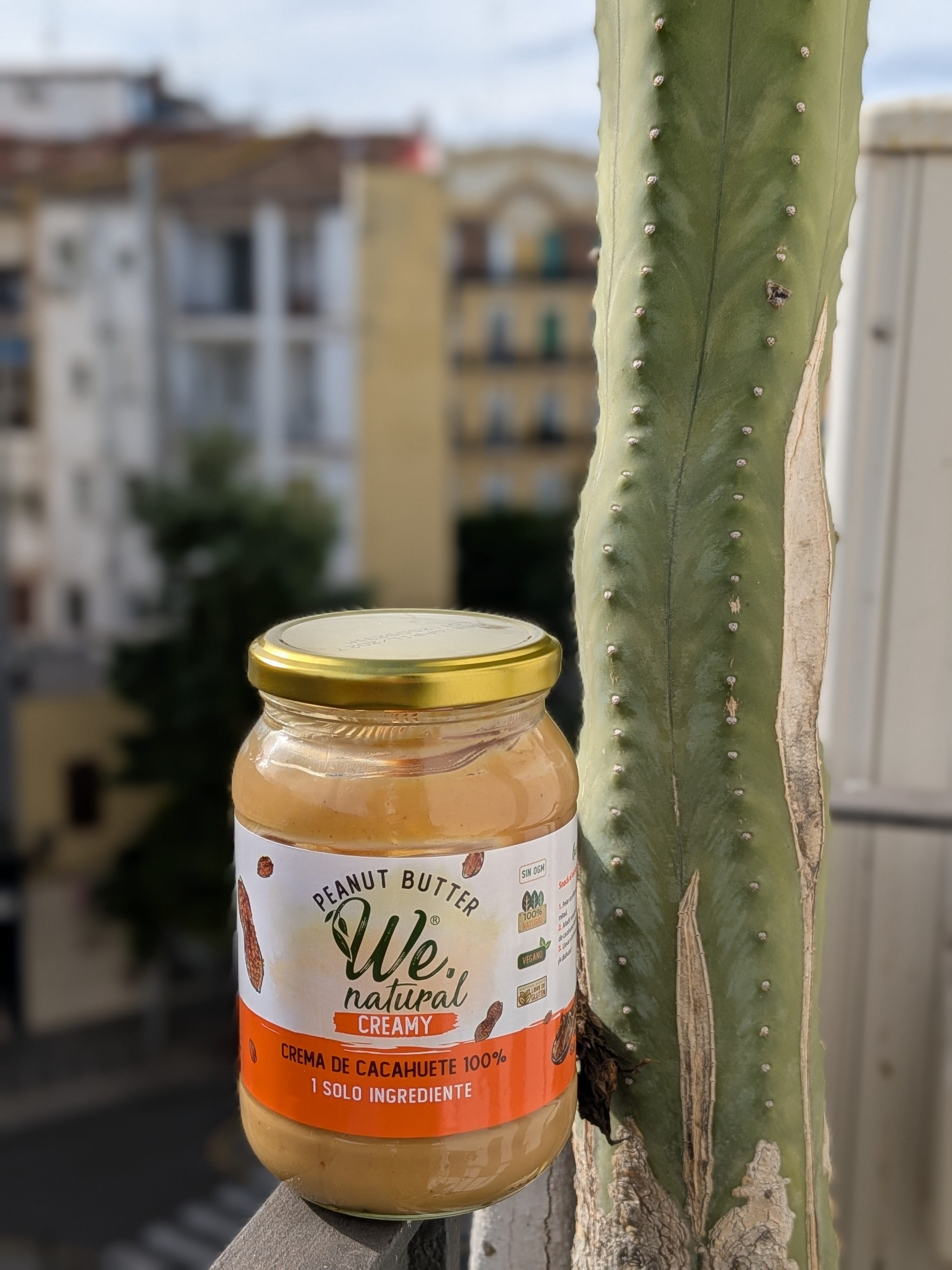
The Peanut Butter Problem has nothing to do with peanut butter. It’s the clearest metaphor I’ve found for why so many Americans move to Spain and complain, fail, or—worse—completely fall apart.
Because here’s the truth that might not sit well with people who refer to themselves as “expats”:
Americans don’t fail in Spain because Spain is too different. They fail because they want Spain to behave like a better version of America.
They say they’re excited for culture, but what they really mean is they want culture that feels familiar.
They say they want slower living, but they also want customer service on demand.
They say they want walkability, but they also want the exact products, rituals, and comforts they grew up on. They want a car for certain errands—or when it rains.
Maybe they want one-ingredient peanut butter, but they also want peanut butter that tastes exactly like Skippy.
It doesn’t work that way.
And when Spain doesn’t bend to their expectations—when the milk tastes different, when the pharmacy doesn’t act like CVS or Walgreens, when the supermarket doesn’t feel like Whole Foods, when people don’t respond with a phony employee handbook-mandated smile and how can I help you—their brains short-circuit.
It’s not that Spain is hard. It’s that American life programmed you to expect the world to arrange itself around you.
This isn’t a moral failing.
It’s conditioning. Culture. Muscle memory.
A lot of Americans don’t realize how deep the indoctrination goes because they’ve never lived anywhere that isn’t shaped by it.
I didn’t have the “Spain doesn’t have what I need” panic. I didn’t miss American products.
I moved to Spain looking for a better version of almost the same life I was living.
Not wholesale reinvention.
Definitely not escape.
Surely, not an unrealistic and childlike request for a makeover montage where I suddenly become a new person.
None of that is even possible, preferable, or even close to good for you.
I wanted the same daily rhythm I’d already built in Los Angeles—walking, markets, routines, errand loops that make a day feel like a day. I just wanted that life in a place designed to support it instead of force me to settle and half-ass it.
That’s the thing most people overlook:
If you move abroad already thinking about what you’re going to miss, that’s red flag number one.
Because the stuff Americans claim they’ll “miss” is almost always the stuff that made their life stressful to begin with—brand loyalty disguised as identity, convenience disguised as necessity, processed nostalgia disguised as comfort.
They don’t miss peanut butter. They miss the idea of peanut butter—how it tastes, how it feels, how American it is, how it plugs into childhood memory and brings comfort and familiarity at a time when so much is uncomfortable and unfamiliar.
So why confront the challenge of unease and cluelessness? Just whine—inaccurately and incessantly—that “you can’t get peanut butter in Spain.”
When something here doesn’t match your learned impression of how things—everything—should be, treat it as a deficiency rather than a welcome cultural difference. Or—in a less lofty way—just a basic difference to smile at because you’re in a different place. And the truly cool part about being in a different place is that you learn something new every single day. Sometimes, every hour of every single day.
I didn’t step into Spain looking for substitutes. I stepped in looking for better urban structure and a culture worth writing “home” about.
A functioning walkable city.
Markets around the corner.
Errands by foot instead of car.
Neighborhood routines that naturally anchor your life instead of scatter it.
In other words: I wanted continuity, not comfort. And there’s a massive difference.
People who fixate on what they’ll miss aren’t actually ready to live anywhere new—they’re preparing for withdrawal. They’re telling on themselves without knowing it.
The Americans who struggle here always reveal the same thing: they don’t actually want Spain. They want a Spain that bends to their will, doesn’t challenge them too much, and matches their American preferences. A Spain that validates the inferiority complex they showed up with—the one that says:
If this place doesn’t look and feel like the world I already understand, then something must be wrong with the place, not with my expectations.
Spain works because it already works. It’s not waiting to be improved by American expectations.
That’s the difference.
Spain forces you to interact with a functioning system as it is—not as you want it to be. And this is where people either grow… or completely unravel.
If you can only function inside the system that made you anxious and exhausted, you’re not only attached to comfort—you’re attached to your conditioning.
Spain—and living abroad—breaks that conditioning instantly. Or it breaks you.
It doesn’t give you the processed nostalgia your brain associates with “normal.”
It doesn’t give you customer-is-always-right performance.
It doesn’t give you a culture built on apology, escalation, and perpetual alertness.
It doesn’t give you a “fix” for the life you burned out on.
It gives you something much more tangible if you stop projecting and complaining long enough to notice:
Neutrality. Sanity. Proximity. Non-hostile public life. Systems that let you live in the most efficient, convenient, and vibrant way instead of blocking and triggering you at every turn.
That’s the bigger story beneath the Peanut Butter Problem:
Spain doesn’t give you comfort. Spain gives you a sane baseline from which to build your life.
If your habits, your identity, your expectations—or your anxiety—are wired to an American baseline, that shift feels like loss.
If your desires are wired to a different way of living—routine, walkability, community rhythm—that shift feels like a breath of fresh air.
If this resonates—if you want more of the honest, practical, unfiltered version of what it actually means to build a life abroad—I’m running a deal right now:
How It Works (and Why It Doesn’t) is 50% off.
And if you pay in euros, I’ll add an extra 30 days free.

routine, walkability, community rhythm
I am glad I read that!