

Over the last month I’ve been writing about the systems that shape everyday life in cities—parking lots, street design, risk culture, and how children and old people move through public space.
The point of the series isn’t nostalgia or culture war.
It’s to show how the design of a place determines the way people live.
In the last couple of weeks we’ve looked at:
• The long lines that form in American drive-through systems
• How neighborhood food systems disappear
• The geography of everyday life
• The hostility of parking lots
Today, we consider Costco.
Why does Costco even exist?
To service small restaurant owners and similar businesses.
Why do so many members of the non-restaurateur American public regularly visit Costco?
It goes back to the built environment and the culture it produces.
Navigating daily life for most Americans is such a pain in the ass—thanks largely to the things that are supposed to make daily life less of a pain in the ass—that many people bundle most of their food shopping into one massive haul.
To be fair, this dynamic has crept into Europe. But—like with parking lots—it’s not a prevailing part of everyday existence across the continent, particularly in cities.
The United States is Costco’s dominant market with roughly 643 warehouses, whereas Europe remains a developing frontier with only about 40 locations across the UK, Spain, France, Sweden, and Iceland.
Costco is treated as a novelty American export in Spain, not a daily necessity. Here’s hoping it stays that way.
In the US, the vast majority of stores are located in suburbs to accommodate massive 150,000-square-foot footprints and surface parking, though they have successfully infiltrated some dense city centers.
Conversely, European locations are almost exclusively suburban or industrial (e.g., the outskirts of Madrid or Seville) due to strict historic city planning and the inability to secure large plots in city centers. While the US market is saturated with a mix of suburban and rare urban stores, the European strategy relies almost entirely on driving destination traffic to industrial fringes where land is available.
To operate in dense, land-constrained cities like San Francisco, Costco utilizes a multi-story "infill" design rather than its traditional single-floor warehouse. These locations feature parking garages (often underground or on the roof) stacked directly with the retail floors, connected by specialized cart escalators that lock shopping cart wheels in place as customers move between levels. This allows Costco to maintain its massive bulk inventory in a smaller geographic footprint by building vertically instead of horizontally.
I’ve been to the Costco in San Francisco and—to put it kindly—the surrounding area is not pedestrian-friendly.
The idea that a city like San Francisco would allow, and that people would put up with this so close to its dense urban core is nothing short of tragic. But that’s another story for another day that exists in a very specific context.
The broader Costco story takes place in suburbia and has almost nothing to do with Costco.
Because driving ended up largely inefficient, people bundle tasks.
Weekend errand blocks, endless route planning, and classic Costco runs.
Americans don’t run errands. They process them in soulless batches.
The Costco run is the purest expression of this system.
You drive twenty minutes, circle a parking lot the size of a small airport, and push a cart through a warehouse filled with industrial quantities of everything—olive oil, paper towels, frozen chicken, cereal, batteries.
Then you load it all into the car and drive home to store it.
Not because you need it today.
Nothing’s fresh. Food from Costco bears zero connection to anything except the generic Kirkland name.
But people do huge Costco runs because it’s inefficient to come back tomorrow.
Americans have giant refrigerators.
The refrigerator isn’t just an appliance in the United States.
It’s infrastructure.
It exists to support the long-distance logistics of everyday life.
For the record, we have large refrigerators in Spain, too. In fact, when we needed a new fridge, our landlord got us a big one. We have next to nothing in the freezer compartment and keep the main fridge barely half-full.
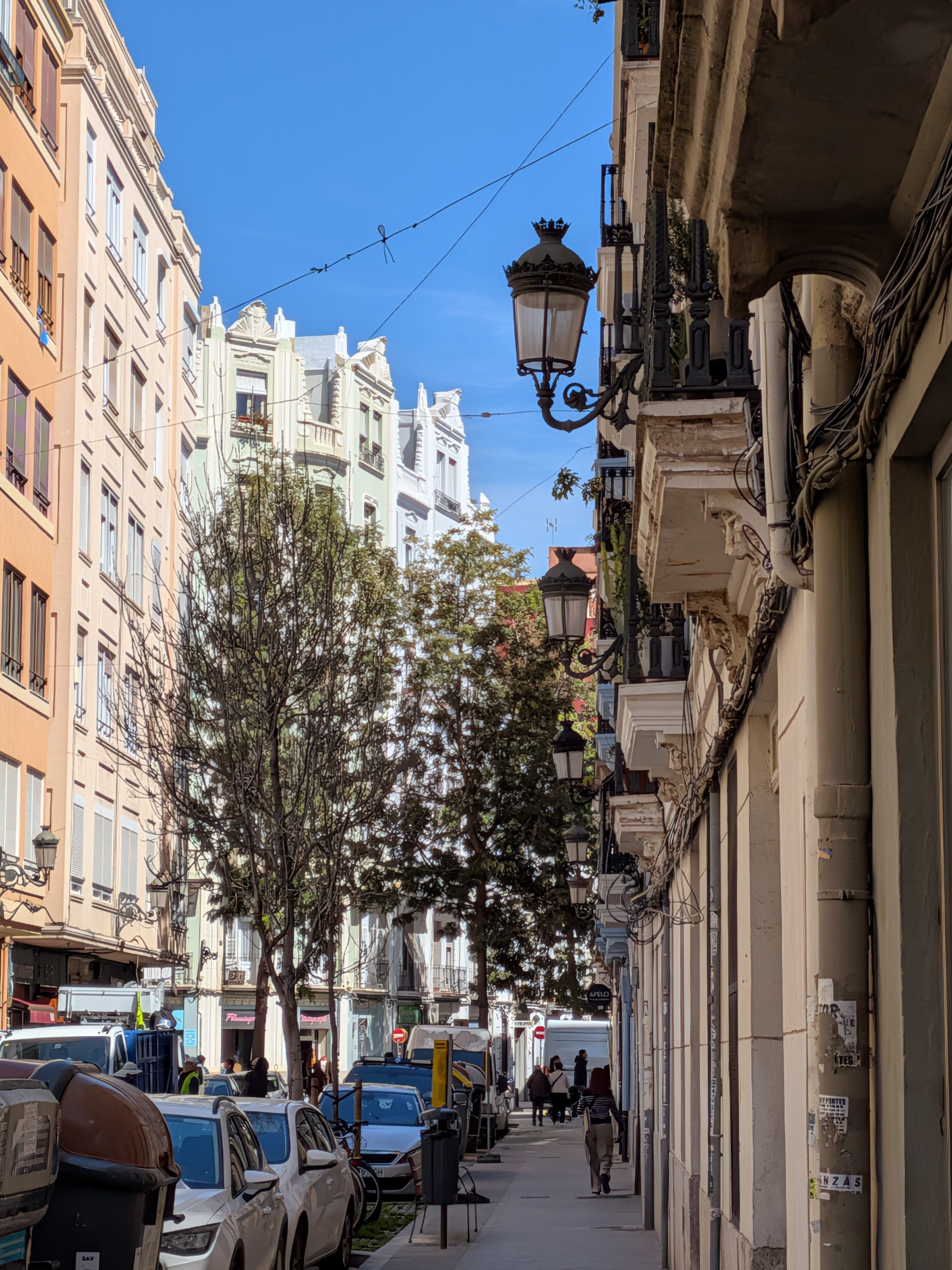
Other than keeping a few things on hand in case of an extended emergency, we don’t stock up on things. We shop locally almost every day, including 3-4 weekly trips to the neighborhood municipal market.
It’s a completely different way of life made possible by a sane and logical approach to city planning.
Simple as that.
In the US—and in European suburban enclaves—Costco solves distance and inconvenience.
Costco is a symptom of American geography.
Humans have no choice but to adapt to bad systems that remain widely accepted.
Cheap becomes a driving force that undermines quality. Especially if you don't have a comfortable income. It's prevalent in clothing, home goods, services and food. I pay attention to the horrible effects of fast fashion and the efforts being made to move away from it, but so much of the support for these bad systems comes from people who don't have other options. It's a big beast to kill if that's even possible at this time.
My wife doesn’t mind doing errands, including driving to do them. What she loves about Costco is saving money. I wish she would prioritize shopping near home more, including walking or biking to do it, but so far the money-saving has kept her driving to Costco 🙄