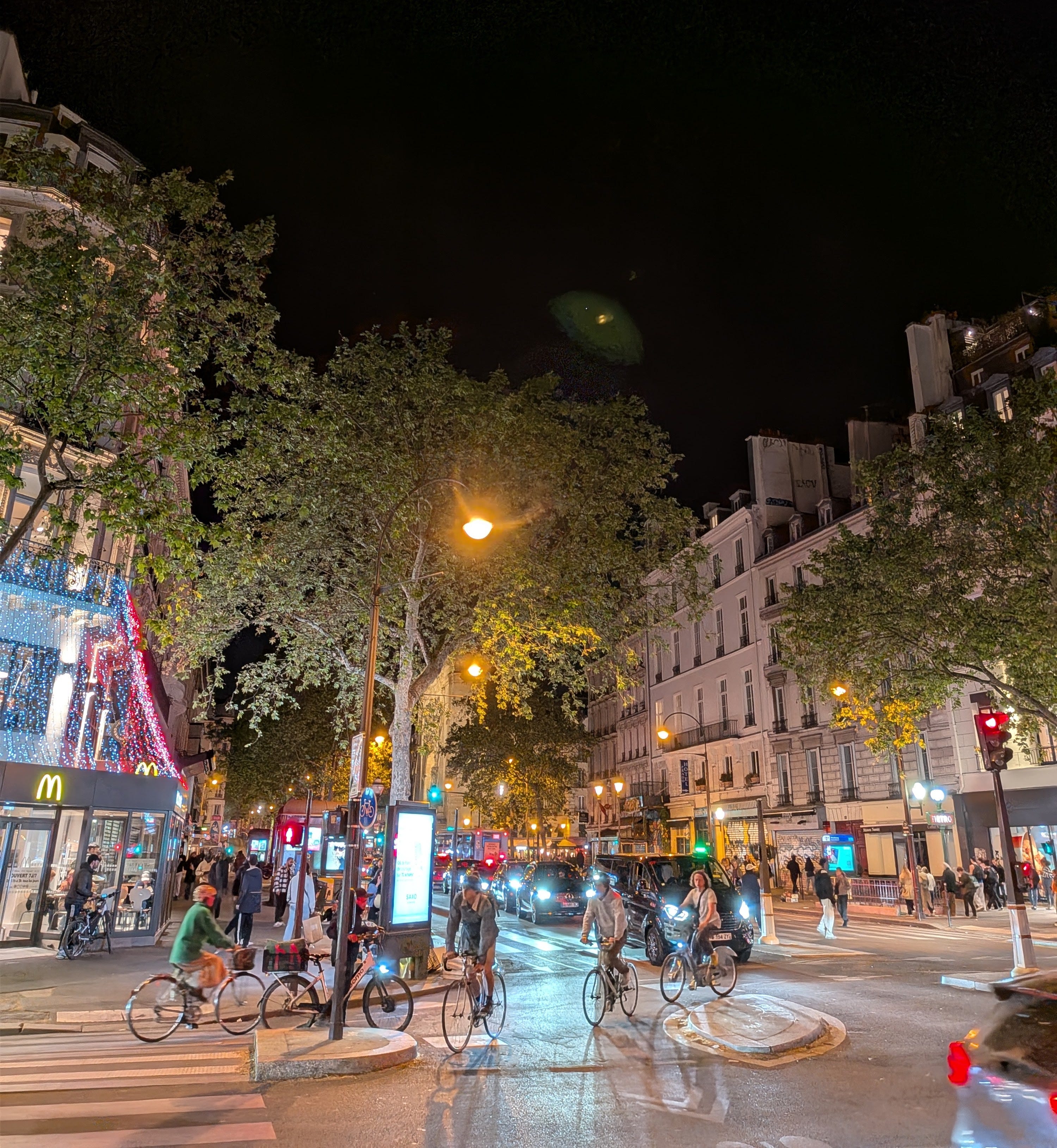
Last month, we watched a segment on French television about the city’s moves to restrict or remove the private automobile from large swaths of Paris.
It was like watching podcast bros play the victim.
You live in a world that—historically—you have dominated hysterically and hegemonically. Then, when the rest of the population comes to finally put you in your place with actions rather than words, you act as if you’re the target of oppression.
It’s laughable. And really kind of gross.
Seeing the reaction of everyday drivers to parking enforcement and access restrictions and the gripes from taxi drivers is nothing short of pathetic. They act as if somehow they have the right to the road simply because… that’s how it’s always been.
Suddenly, with their dominance finally challenged through official government action, they’re asking for moderation in the conversation.
What fucking nerve.
This is actually one area of discourse in the world that doesn’t require moderation. Because these cries for moderation—for taking a step back and reassessing the implementation of pedestrianization programs—are little more than disingenuous tactics to halt long overdue progress.
These reactions dominate the “discussion” in the United States. But Paris isn’t immune. The folks interviewed in the Paris TV segment trot out the same tired thought-free lines to make arguments that have one and only one goal—to preserve the status quo.
Of all the things they say the one I love most is that somehow street improvements focused on bikes and pedestrians will slow deliveries or emergency vehicles.
This couldn’t be any more absurd.
There must not be a lot going on in a brain that intuitively comes to the conclusion that removing most automobiles from a street and replacing them with people and bikes will increase congestion and slow emergency response times.
Any logical mind realizes—obviously—that it’s far more difficult to get around bottlenecked auto traffic than it is humans or humans on bicycles. That this even needs to be pointed out shows how disingenuous that argument is in the first place. It’s like saying it’s harder to go through a door when it’s closed than when it’s open.
Forget intuition. It often does us wrong.
The research—from London to Ireland, from Cedar Rapids to Toronto, from New Jersey to Oslo—shows that everything from “road diets” to “Low Traffic Neighborhood restrictions” to Barcelona’s Superblocks to the world's most aggressive street-redesign programs in Paris have improved response times.
Many of the studies that provide this data tested “perception versus reality.” That the opposite of what should be the obvious finding somehow became perception really does reflect a handful of hamsters and one wheel living rent-free in brains around the world with their hub in the United States of America.
In Paris, vehicles that need access have access.
In fact, in areas where cars have been banished, taxis, delivery drivers, and emergency vehicles now have the space to themselves.
It’s pretty incredible.
They might have to wait a few seconds to maybe a minute to get around bikes and people; not valuable minutes or more when they literally can’t move due to congestion. And, in my experience, cyclists and pedestrians are far faster, more likely, and open to getting out of the way than a person in their two-ton cocoon.
There’s no serious argument against what they’ve done in Paris that holds water.
Pollution has been cut by more than half in the city. The terraces, cafés, and restaurants are full throughout the city, but with a calm few places manage because they haven’t been as bold as Paris.
Thanks, by the way, to a Spaniard!
What's happening in Paris and—to a lesser, but still encouraging extent—around the world is long overdue.
Automobiles—particularly private motor vehicles—have dominated for far too long. Watching their drivers play the victim—watching them react emotionally by saying the opposite of what's true, right out of an all-too-familiar playbook, is a special kind of satisfying.
Because what they’re actually losing isn’t freedom.
It’s dominance.
There’s a difference.
Nobody is stopping people from getting around Paris.
The city is simply refusing to organize itself around the convenience of private drivers at the expense of everybody else.
That’s what this debate is really about—not bikes, not deliveries, not emergency vehicles.
Power.
Who gets the space. Who gets prioritized. Your answers to those questions ultimately determine what type of city you want to live in.