

I love bikes.
Bicycles.
So much so that I worked at a bike shop in Southern California while studying urban planning.
At the shop, we had a balance bike or two in stock. We kept one out and always tried to entice the American helicopter parents who frequented the store to buy it instead of a set of training wheels to “teach” their kids how to ride a bike.
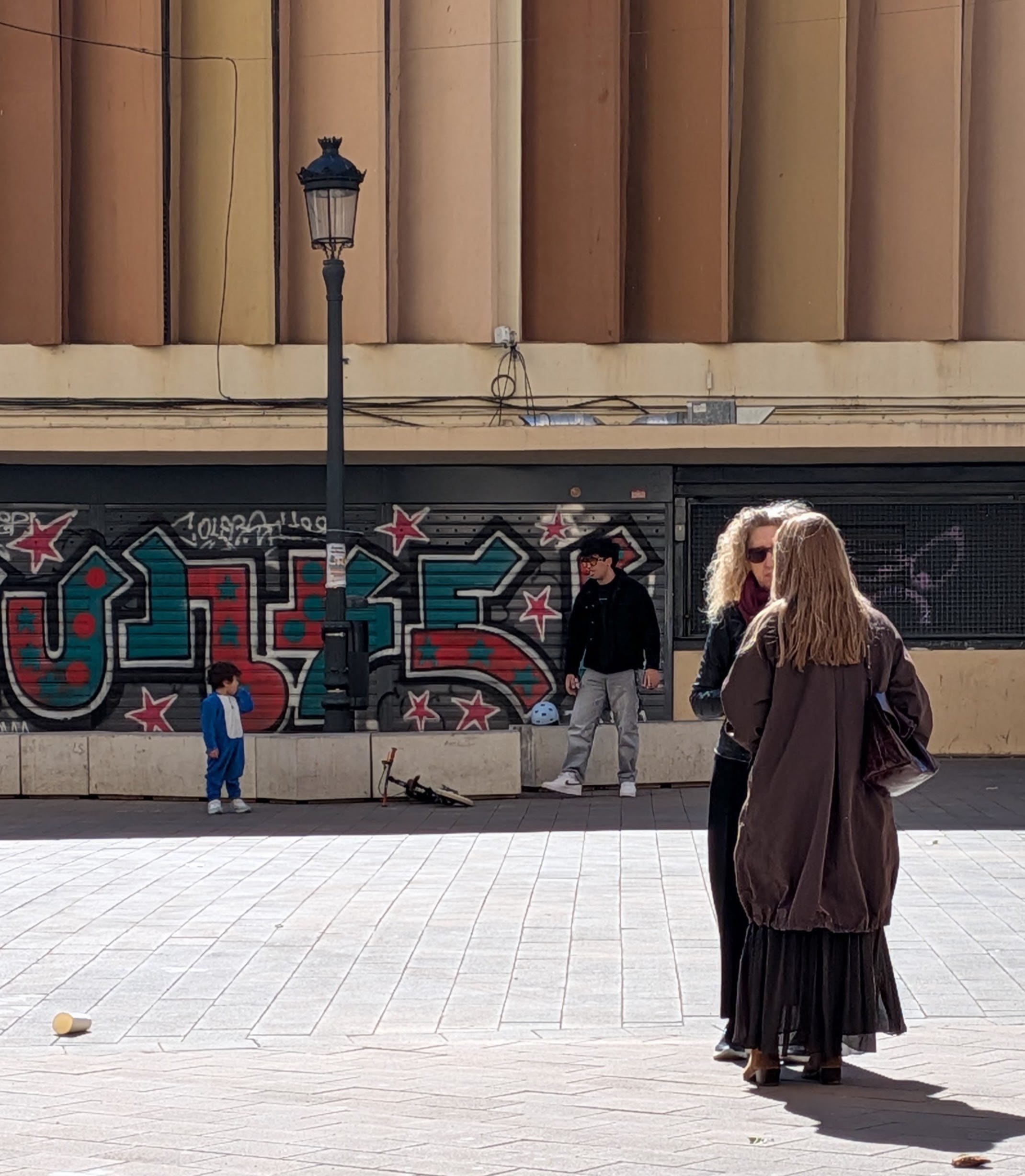
In the center background of that image, there is a balance bike—two wheels, no pedals.
As we watched the kid in blue ride through the plaza, he was picking his feet up off the ground for seconds at a time and, periodically, letting his left or right touch the ground for a second—for balance.
Of course, he has no clue it’s happening—he’s just having fun—but he’s learning how to balance and how to ride a bike.
It’s a European thing. Or, at least, that’s how we tried to sell it to these American parents. Even with that cachet, most didn’t buy it. They wanted training wheels.
It’s funny because we actually had their—and their kids’—best interests in mind. We made an extra commission on training wheels, but nothing more than the standard on balance bikes.
Balance bikes are just better.
Yet, Americans are intent on making the process of learning how to ride a bike another in a long line of anxiety-producing moments for their children. I’m guilty as charged. I didn’t know better about this—and many other things—when I was raising my now 22-year-old daughter.
With training wheels, you’re not learning how to balance. You’re not really learning anything. The build-up to the moment when you take the training wheels off is so intense—so momentous—that it invariably gets delayed multiple times.
Then, the day comes. Nerves are high. Your kid watches as you remove the bolts of the training wheels with a wrench. They get on the bike while you hold the back of the saddle, keeping them steady until you nervously let go.
The kid wobbles—you can barely call it balances—and usually ends up slowing to a near stop, tilting to one side, and letting the bike hit the ground as they keep themselves up with their dominant leg.
Then, they use the bike without training wheels a lot like a balance bike. With a few hours or days, they learn how to balance and—for the rest of their life—it’s just like riding a bike.
The balance bike approach removes most of the drama from the entire process.
Kids fall occasionally, but they get back up. And because they were balancing all along, the moment when they finally ride a real bike with pedals barely feels like a milestone.
There’s no big reveal.
They were basically riding the bike the entire time.
That approach reflects a broader cultural difference you notice quickly in Europe.