If you’re moving abroad or just need to hold or convert different currencies, consider using Wise. I’ve been using it for more than three years now, including for nearly two years in Spain—it’s fast and efficient.
If you sign up through this link, you’ll pay zero commissions on your first transfer up to $600.
If you told someone that you drove your car four minutes to the supermarket today, they wouldn’t think twice.
Maybe they’d think you’re weird for providing such a pedestrian detail of daily life.
If you then told someone that you consulted AI while writing an article, more than a few someones would judge you. People would accuse you of everything from environmental destruction to contributing to humanity’s downfall.
So many people are so eager to take sides on AI—to virtue signal—that they’ve lost consistency of thought. In fact, it might require the right prompt entered into just the right model for some semblance of consistency to return.
Recently, Medium made an encouraging announcement regarding TK, its new writing app. Medium doesn’t believe in writers passing off AI output as their own—in fact, they prohibit such slop—but they understand and appreciate that AI can play a legitimate role in the writing process.
If the human editor that just about none of us are lucky enough to have and Google Search had a superchild, it would be artificial intelligence.
In other corners of the internet, the mere suggestion that AI might have helped produce something brings out the communal pitchfork. People line up to take one side or another. And, of course, it’s the more comfortable and societally acceptable stance to wholesale denounce AI.
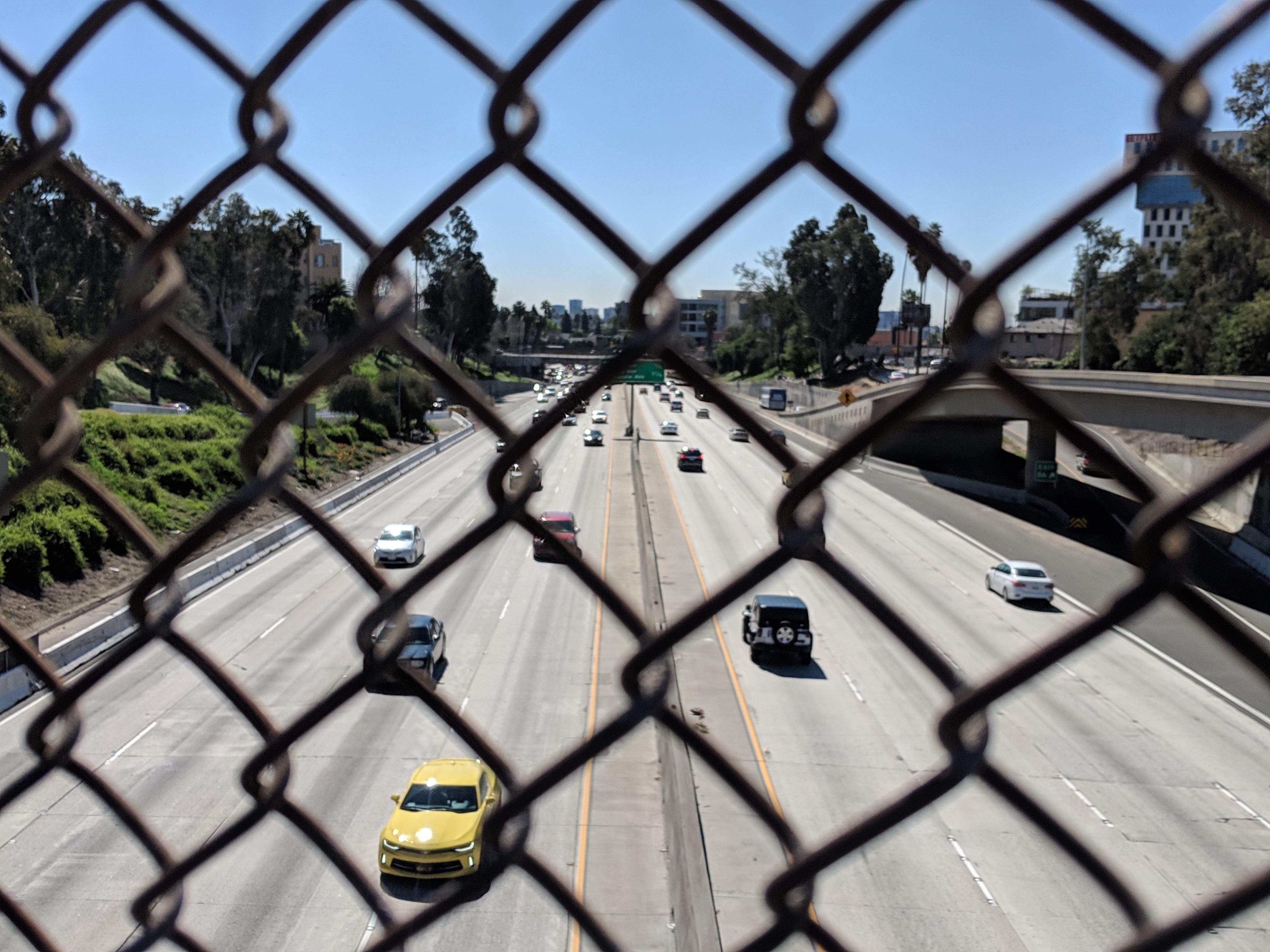
What’s funny to me—as an urbanist and writer—is that these same people who render AI wholly evil seem to have no problem jumping in their car to do life multiple times a day.
The World Health Organization estimates 1.16 million people die annually in road traffic crashes worldwide. That’s before accounting for the health effects of vehicle emissions and the social consequences of car-dependent development. Thanks, in part, to car dependency, we’re lazier, we’re fatter, less engaged, and less satisfied with life.
But drivers are rarely, if ever, expected to justify their participation in such a fucked-up system.
The death and destruction are happening now. That’s objective fact. But we’ve spent generations accepting the havoc car dependency wreaks so people can live the life they’ve been brainwashed into accepting as ideal across the United States and in other parts of the world. On this, most people don’t take a side—they don’t say a peep.
We distract ourselves with science fiction-like tales of future death and destruction, but are effectively unfazed as we participate in a system that kills people regularly—even as alternative ways to organize ourselves exist.
So, some people have no choice in the matter. They live in environments they can only reasonably navigate with an automobile. But that’s precisely the problem. We’ve designed so much of society around a way of life with well-documented consequences, then decided that participation in that system is perfectly normal.
So it’s easy to say you “have no other choice” in the matter; it’s a built-in, socially acceptable cop out.
Because some people do have other options. They just choose not to exercise them. How many people who live in cities could go without a car, but choose to drive one anyway? How many people could walk or bike to work or to run errands but find some excuse to maintain the status quo?
The funny thing is that none of this means we shouldn’t question AI. We should. But why do we treat the documented harms of technologies we’ve accepted as the cost of doing business, yet refuse to let new technology we still have time to properly regulate into the family?
AI has real risks. They need to be addressed. The technology needs to find its place—we need to put it in its proper place.
Medium—as a writing platform—is doing a good job of that. They’ve decided to be an active participant in what amounts to the implementation of AI. They realize this isn’t a time for jumping on the most palatable bandwagon; it’s a time for accepting reality—as tough as it might be to swallow—and helping shape its trajectory in productive fashion.
While some people tried to do likewise as the automobile established itself as a clear, present, and concrete danger, it became so thoroughly embedded in everyday life that questioning its place in society became the exception rather than the rule. Because choosing to do something different would have been inconvenient or uncomfortable.
Entire societies choose to be wasteful and unhealthy, yet so many of the participants bellow about how much water it takes to power ChatGPT.
It’s all kind of comical really. And it’s also just a tad twisted that I feel like the oddball pain in the ass for bringing any of this up.
There’s a big difference between legitimately questioning AI and loudly and proudly announcing that a technology is evil so everybody knows where you stand and you can have a group fist bump followed by a congratulatory pat on the back.
Imagine if we devoted even half the energy we spend condemning AI to questioning why driving four minutes to the supermarket is perfectly normal.
One requires taking a painfully easy position. The other has everything to do with changing how we live.
And therein lies the problem. Virtue signaling has come to the point where it passes for critical thinking and for action. Many technologies shape the world we live in — often with negative effects. Until we’re ready to stop looking the other way on the ones we’ve normalized, our objections to the ones we don’t yet fully understand are little more than chest-beating noise and empty bravado.