

The biggest culture shock I’ve experienced since moving to Europe eighteen months ago has nothing to do with the culture—Spanish or otherwise.
All of that has gone down pretty much as hoped and expected.
Other than typical language learning obstacles, I’ve found myself right at home where it matters and where it’s possible as an American. One who has written about my country’s shortcomings for the better part of the last three decades.
I don’t believe in many elements of the American way so—all along really—Spain made complete sense.
But realizing where the United States has fallen woefully short in areas such as urban planning, public policy, and overall quality of life doesn’t mean you’re immune to American indoctrination. I arrived in Europe thinking that the United States was the primary innovator in the space I’ve been writing about for 20 years—finance.
I was wrong.
What surprised me wasn't simply that Europe had caught up. It was that, in several of the most important areas of consumer finance, it has moved ahead—and many American companies haven't fully recognized it yet.
Between Europe’s push for payments sovereignty and the rise of companies such as Revolut and bunq, the continent is reshaping how people bank, move money, borrow, invest, and travel. Much of it is happening amid remarkably little attention in the United States.
I write about what living in Europe allows me to see differently—from finance and cities to everyday quality of life. Subscribe to follow along.
Three months ago I started pitching what I thought was an undercovered story to finance editors.
The argument is simple...
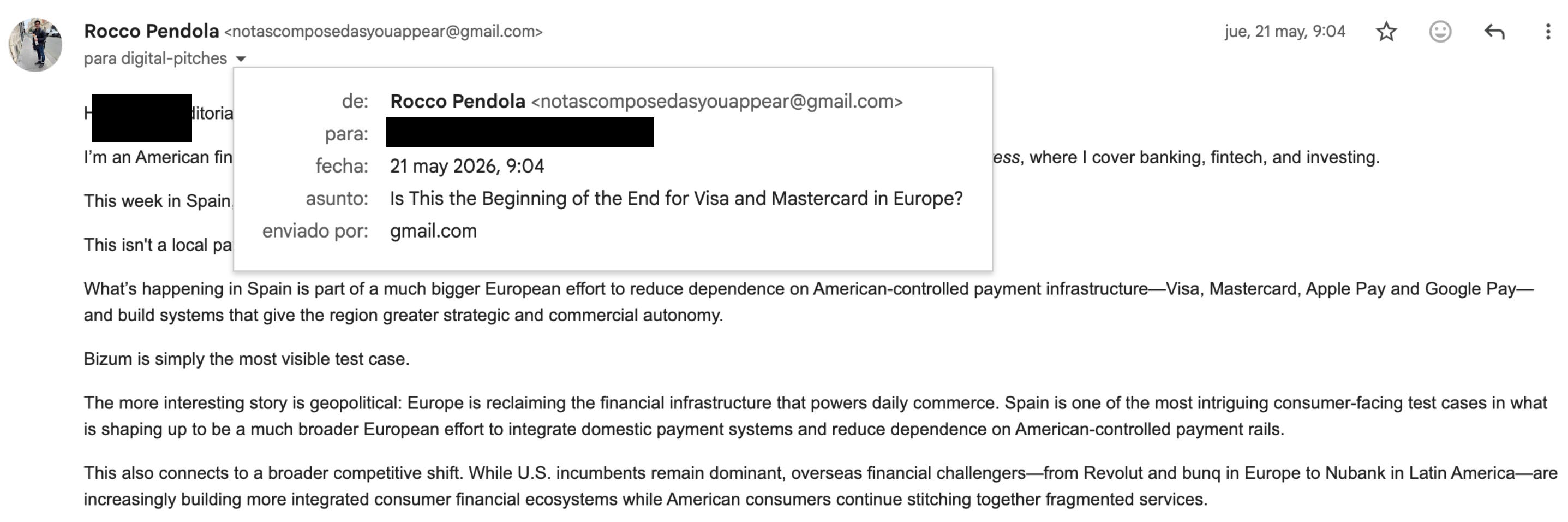
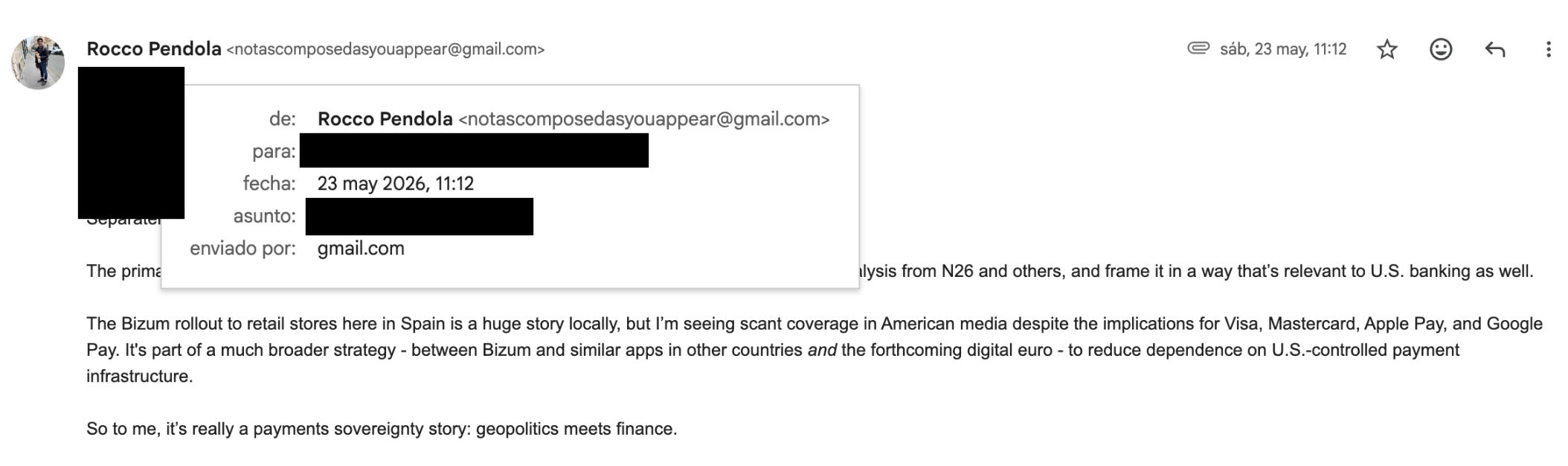
The small handful of outlets I sent my story to—mostly in the United States—didn’t buy my pitch.
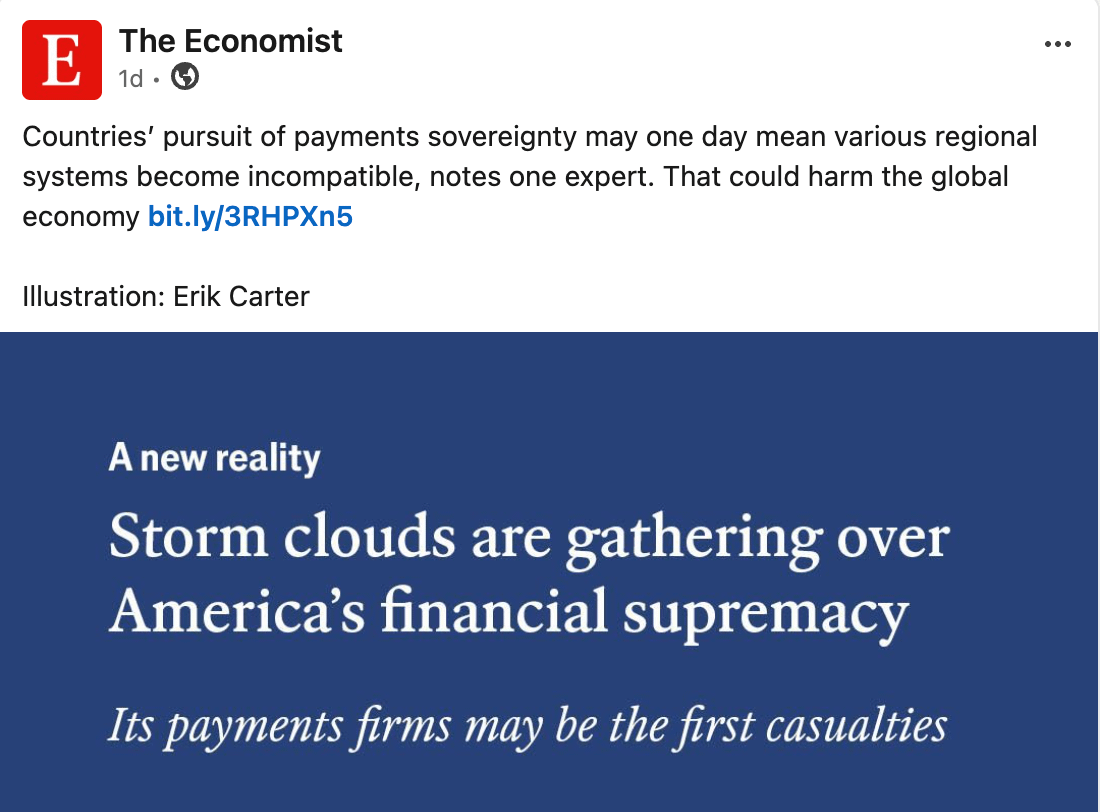
Last weekend, The Economist published essentially the same thesis.
I’ll be the first to admit it. I talk a lot. Sometimes I even rant.
But the reality is that I really don’t enjoy hearing the sound of my own voice. And I don’t like blowing smoke up people’s asses—especially editors and readers who spend precious time with what I write.
The rejection of my pitch, in part, reflects the reality of pitching as a freelance writer: it’s a numbers game and, often, when you pitch a story like this, the outlet already has people working on or able to work on the same line of thinking. While I didn’t pitch this particular story to The Economist, they don’t need me to tell them what’s up.
That said, there are others who should know better and realize a good, forward-looking story before other, higher-end outlets—such as The Economist—get around to it. When they don’t, I’m convinced that part of the reason is the American indoctrination I mentioned earlier.
An editor can have a writer they know and trust saying:
I’m in Spain. I'm watching this happen in real time. And I don’t think people in the United States—including many banks and fintechs—realize the gravity of the situation. This is about to be a big story and it has massive implications for American companies.
Yet the story still feels easy to dismiss because it challenges an assumption that’s deeply embedded in American thinking: that the most important financial innovation will naturally originate in the United States.
It’s not arrogance so much as perspective—a mix of preconceived notions filtering out worldviews you’re not close to or haven't experienced. If you don't see it, you don't even begin to try to understand it.
When you’ve spent your entire career inside the world’s dominant financial market, it’s difficult to imagine meaningful innovation emerging somewhere else first. But that’s exactly what’s happening.
From here, it doesn’t feel surprising anymore. It feels obvious.
Because the writing on the wall for the United States is hiding in plain sight—in Europe.
The story has two distinct but connected threads.
The first is deliberate and straightforward. European policymakers increasingly want to reduce the continent’s dependence on American-controlled payment infrastructure through initiatives such as the digital euro and homegrown payment networks like Spain’s Bizum—a payment platform similar to Venmo or Zelle.
The second is almost happening by accident. European fintechs like Revolut and bunq are well-prepared to challenge American financial dominance. There are others I won’t mention here. And some don’t originate in Europe—such as Brazilian fintech behemoth Nubank.
These companies are building products around how an increasing number of people around the world actually live and manage money. In doing so, they’ve ended up creating banking and lifestyle experiences that many Americans would find surprisingly unfamiliar—and, in many cases, superior.
Together, these two forces are creating something few Americans have noticed: Europe is improving its financial system and beginning to export its model.
It’s probably best to “show you” what I’m talking about with part of a recent pitch and links to two articles that did get picked up. Together they help tell the story that’s about to catch many Americans by surprise:
The Financial Superapp That’s Coming to America
…Right now, most Americans still use multiple apps and institutions to manage money, travel, investing, payments, foreign exchange, and life across borders. A growing number of Europeans don’t. For example, more than 80% of Irish adults bank with Revolut. Here in Spain—Revolut’s third largest market—the company has over six million accounts and is rapidly expanding.
In Europe, finance is becoming a lifestyle—or at least that’s how many companies like Revolut are selling it. They’re combining travel, payments, investing, airport lounges, eSIMs, foreign exchange, and other services into superapps that feel less like banks and more like consumer brands.
As Revolut and others prepare for a much larger U.S. push, the appeal could be strong, in part because the United States doesn’t have a financial superapp…
I believe Revolut will end up one of the biggest consumer-facing developments in the US since Apple introduced the iPhone. While social media, streaming, and AI have transformed parts of our lives, they largely grew on top of the ecosystem the iPhone created. The iPhone won because it absorbed dozens of previously separate experiences into a single relationship—not because it’s a better phone.
Now Revolut is executing a variation of that globally, with the U.S. its next and most ambitious target.
The eventual story will be that Europe built a different kind of consumer brand—one that happened to emerge from finance.
At its core, this is a story about a shift in how people spend, travel, and navigate daily life—and the companies positioning themselves around those expectations and experiences.
The United States gave the world Wall Street, Silicon Valley, and the iPhone. Now, one of the most ambitious consumer platforms of the next decade is set to arrive from Europe—and most Americans still have no idea it exists.
4 Reasons JPMorgan Should Buy Revolut
What if Revolut Isn’t the Only Threat? How Santander Is Quietly Targeting the US
The implications don’t stop with Revolut.
They extend to JPMorgan, Santander/Openbank, payments, and Visa, Mastercard, Apple Pay, and Google Pay.
And ultimately to who controls two things: the infrastructure of money and the largest number of consumer accounts over the next decade.
That’s the intersection where all of this essentially ties together.
Let’s sketch it out.
Last month, I had a great conversation with Felipe Peñacoba Martinez, CEO of Getnet Platforms Payments Hub (a Santander company) and former CIO of Revolut Bank (EU).
The title is a mouthful, but it’s important because few people have seen this transformation from both sides. Peñacoba Martinez helped build one of Europe’s fastest-growing fintechs before returning to one of the world’s largest traditional banks.
His perspective reinforced something I'd already begun to suspect: the distinction between banks and fintechs is disappearing. Traditional banks are becoming technology companies, while fintechs increasingly want to become global banks.
Santander isn’t trying to be the Santander of twenty years ago. Through its broader One Transformation strategy, it’s trying to become a different kind of bank altogether—one that competes with digital-first companies on their own terms while leveraging the trust, balance sheet and global reach only an incumbent can provide.
That helps explain why Santander isn’t simply defending itself against Revolut. It’s expanding aggressively through Openbank, targeting the United States, and investing heavily in payments infrastructure through businesses like Getnet.
At the same time, JPMorgan is pushing deeper into Europe.
Everyone is crossing the Atlantic. That alone tells us something. We’re looking at a global competition to define what banking looks like over the next decade.
Payments sit at the center of that battle.
For decades, Visa, Mastercard, Apple Pay and Google Pay have occupied an extraordinarily powerful position in global commerce. European policymakers increasingly see that dependence as both an economic and geopolitical vulnerability.
That's why initiatives like the digital euro and payment systems such as Bizum matter far beyond Europe. They’re all about reducing dependence on American-controlled infrastructure.
That’s one story.
The other is unfolding almost independently.
While governments debate sovereignty, companies like Revolut have built products that feel remarkably well suited to modern life.
Most Americans still piece together a financial life from multiple relationships. One bank. Apps for payments, investing, travel, foreign exchange, budgeting, and maybe a phone plan or eSIM.
Increasingly, many Europeans don’t have to.
Revolut bundles banking, investing, international transfers, travel insurance, airport lounges, eSIMs, budgeting tools, foreign exchange and now an expanding payments ecosystem into a single consumer relationship. Revolut Pay extends that ecosystem beyond banking itself, giving merchants and customers another way to transact that bypasses some of the traditional payment rails.
Revolut says it wants to become one of the world's largest banks. But even that undersells its ambition. It’s really trying to become the default interface through which you manage money.
Revolut has made the United States its next major growth market, while bunq is entering the country with a strategy built around globally mobile professionals and digital nomads. Neither company is treating America as a side project. Both believe the American banking experience is fragmented enough that a different model can compete.
None of these companies needed to set out to challenge the United States. They simply built products around how millions of people increasingly live—working remotely, traveling frequently, moving across borders and expecting technology to eliminate problems instead of creating them.
That’s why I don’t think this story is ultimately about banking.
It’s about consumer expectations.
Whoever owns that relationship will eventually have extraordinary influence over how people spend, save, invest, borrow and travel.
For much of the last half century, Americans understandably assumed those companies would emerge from Wall Street or Silicon Valley. Today, many of them are emerging from Amsterdam, London, and elsewhere across Europe.
That’s the real story.
It’s also why moving to Spain changed how I see finance.
Because living here forced me to question an assumption I didn’t even realize I was making: that if something important was happening in finance, America would be leading it.
Increasingly, that’s no longer true.
And I have a feeling that over the next few years, many Americans are going to discover what I’ve spent the last eighteen months watching unfold from Europe.
If this kind of perspective is useful to you, consider becoming a paid subscriber. It helps support the reporting, interviews, and independent work behind these essays.

Is Revolut available in the U.S. yet, even on a small scale? I can easily see people flocking to it in droves-especially “digital native” generations.
I’m excited to hear this is coming. I have heard of Revolut before, but only through Expat groups as a way to have banking while in Europe. (I am probably way off with all that entails)
Candidly, I’m tired of feeling like I’m being controlled by the US. “You can’t do this, you can’t do that, you can’t go there, now is not a good time with the US market.“
It is about time other banking platforms change all that.