

In response to me calling bullshit on scouting trips, a reader asked:
So... in your view, how long would a person need to "scout" an area to realistically know if they'd like to relocate there?
The question contains a significant part of the answer. Because “how long” is the wrong way to look at it.
In my reply, I said:
My point is that before you even think about "scouting" anything you need to have a better idea of what you want and need from a place, which requires (1) an understanding of yourself and (2) an understanding of how places function. Most people skip those two points and think walking around like a focused tourist will give them real answers.
Whether you do it for two days or two months, visiting a location that’s “on your list” misses the really important considerations people should be taking into account about life abroad.
I fully understand that this might seem like nitpicking. But the problem is that most discussions about moving abroad stay on the surface. In isolation, there’s nothing wrong with cost-of-living estimates, concerns over currency exchange, or even taking a “scouting trip.” It’s just that—taken together—all of these things keep the conversation painfully basic.
The relocation industry likes this because they want to make things simple:
You have a dream. They sell a service. All you have to do is sample your favorite places and make a decision. They’ll charge you to take care of the rest.
The only friction they want to introduce into the process is basic logistical-type friction. The stuff with easy yes and no or step-by-step answers.
The friction that matters isn’t paperwork, visas, residency, healthcare registration, or opening a bank account.
That stuff can be annoying, but it’s ultimately solvable. And—in my experience—much easier to “solve” than the relocation opportunists will have you believe. Here again—they introduce problems that they make you think you need help solving.
Their business model lives and dies on starting off on the wrong foot—it’s sort of pathetic.
The real friction is existential.
What kind of life do you actually want?
How do you want ordinary Tuesday mornings to feel?
Place clearly holds answers to these and related questions, but not until you grapple with #1 and #2 above. This is the type of stuff that’s not even related to moving abroad. It’s the work we do as we grow as adults—self-awareness meets a deep understanding of the type of physical and social environments we prefer and why.
Things no cart-before-the-horse scouting trip can deal with for you. And, because many people have never dealt with this stuff—fully or at all—they go through the internet-supplied motions as glorified tourists on what might be a slightly extended vacation. In fact, they use the dream of moving abroad to self-medicate instead of doing the work.
There’s little risk other than this far-off day that you can’t quite imagine when you might actually get on an airplane and move to a foreign country.
The idea of a scouting trip reminds me of what the author Barbara Ehrenreich did for her book, Nickel and Dimed.
As the book description notes:
Ehrenreich left her home, took the cheapest lodgings she could find, and accepted whatever jobs she was offered. Moving from Florida to Maine to Minnesota, she worked as a waitress, a hotel maid, a cleaning woman, a nursing-home aide, and a Wal-Mart sales clerk. She lived in trailer parks and crumbling residential motels.
Fantastic—for what it is. But a big criticism of her work is that it was positioned as a way to see how it is to be a low-wage worker. That’s a bit difficult to do when you’re not a low-wage worker; you’re merely playing the role of somebody who is one.
Here again—no risk.
Just like on a scouting trip, you’re not someone who has actually made the move abroad.
So where’s the real, meaningful, deep-below-the-surface utility? It really doesn’t exist—at least not the way people who attach so much importance to a scouting trip like to riff.
In fact, I’d argue the opposite.
Someone with a strong sense of who they are and what they want—combined with a real understanding of how places function—probably has a better chance of successfully moving somewhere sight unseen than someone who spends 60 days “scouting” five cities armed with spreadsheets, saved YouTube videos, relocation webinars, masterclasses, and a notebook full of restaurant recommendations.
The latter mess just clouds the landscape of the things you should be thinking about.
Because the key variable isn’t exposure.
It’s interpretation.
Most people don’t know what they’re actually looking at. They think they’re evaluating a place. What they’re often evaluating is how it feels to be temporarily free from their normal life.
That’s not the same thing.
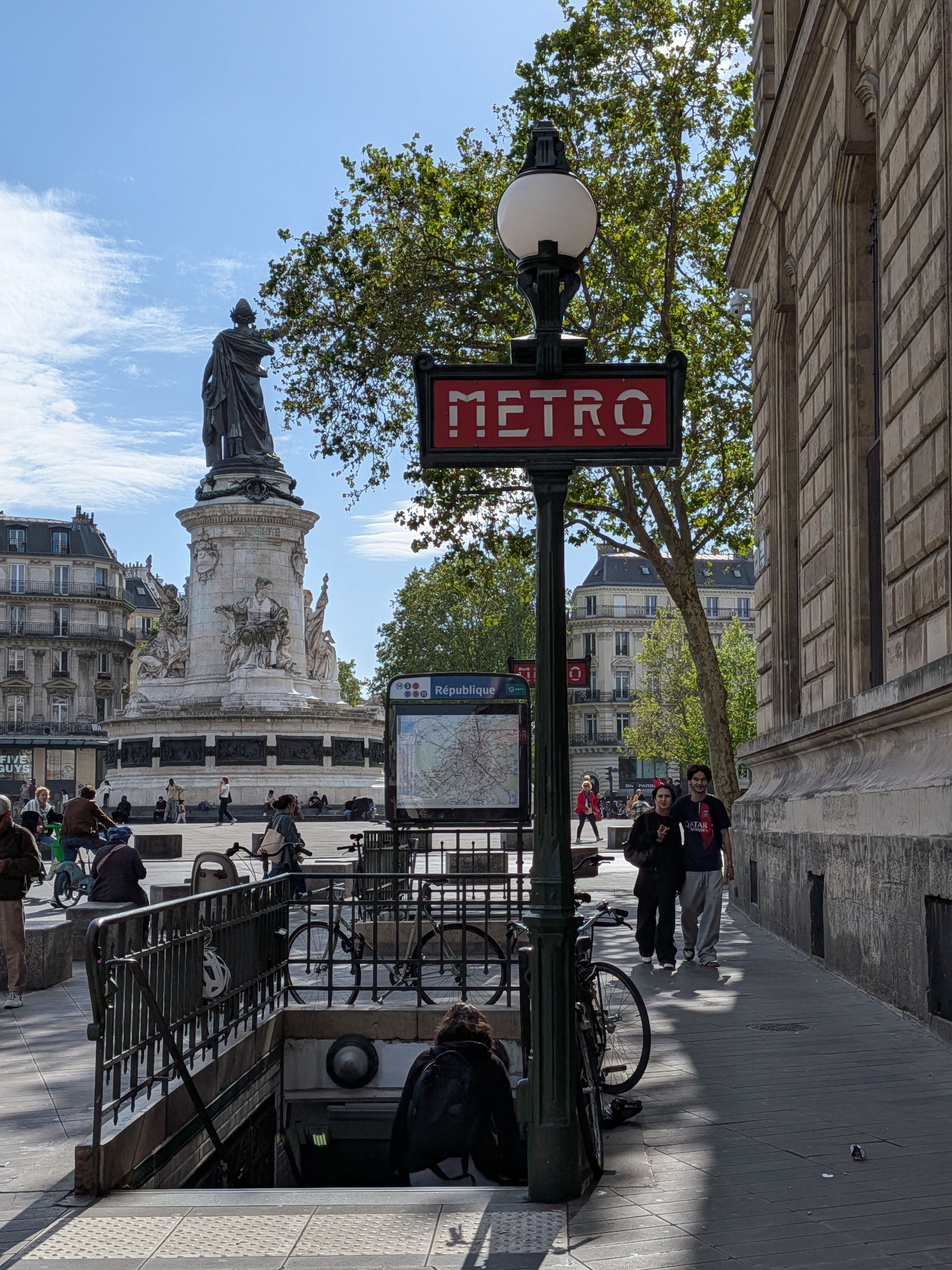
Paris is a perfect example.
From a tourist—or scouting trip—perspective, Paris should have ruined Valencia for me.
It’s bigger, denser, and more dramatic. Its bike infrastructure makes even progressive cities like Valencia look timid. The city has aggressively reclaimed space from cars in a way that feels almost unimaginable in most of the United States and even across Spain.
And yet—
I never once considered moving there.
Not seriously.
Because I know who I am.
I know how I like my days to feel.
I know what friction I’m willing to tolerate and what kind I’m not.
And that type of knowledge is infinitely more useful than another week walking around neighborhoods pretending you live there.
I didn’t go to Paris to figure this out.
We actually moved to Valencia a few years after having only spent a few days there and not really falling in love with it at the time. We just ended up knowing, based on points #1 and #2, that it—particularly our neighborhood—made sense, that it would be the best fit.
That doesn’t mean we were guaranteed success.
Nothing is.
But that’s exactly the point.
Moving abroad isn’t a consumer purchase you de-risk with enough comparison shopping.
It’s a life decision.
And life decisions don’t become clearer because you ate at the right restaurants, toured enough neighborhoods, or took somebody’s relocation masterclass.
They become clearer when you understand yourself well enough to recognize the type of place that fits—and when you understand cities well enough to tell the difference between temporary excitement and sustainable daily life.
That’s the utility.
Not the scouting trip.
Are people afraid of surprises? Reviews are helpful but they take away the sense of adventure. You can discover a great place all on your own or fail and have a crappy meal or a lousy hotel. Does this way of thinking mean that every effort is curated? We have to research and plan so much of what we do so that we can be sure it's right. I think for myself and my husband we planned as best as we could but left some stuff to chance. It's right enough and if it eventually doesn't fit we'll make a change. But so far we are enjoying this experience.
I like the idea of "jumping right in with two feet". Indeed, a scouting trip is unlikely to be the answer, and as you say, there is that risk of falling prey to a relocation consultant.
Now, your "what do I want?" test needs to come first.
Then there is the "affordability" test; do the homework, check prices. Will you still be earning money, might you be swapping pension money in your home currency into local currency.
Then there is the "permanence" test; are you really upping sticks, burning bridges and going or doing what we are doing, which is keeping a small home in Switzerland and spending 8 months of the year in South Africa.
Then apply the "permissions" test; what formalities are needed for you to spend an extended period in that country? Can you work if you need to, either locally or remotely. Think about this; maybe you would be allowed to work, but you don't speak the language.
Once you have the ballpark marked out by these tests, then decide.