

In Los Angeles, my wife and I lived about a 15-minute walk from the “main street” in a neighborhood called Larchmont Village. Even when I lived a little further away in East Hollywood, I’d make the 30-minute walk to Larchmont Boulevard, primarily because I’ve always had a thing for “main streets” sitting in the heart of large cities.
Way back in 2008, I published a paper on the subject in the journal, Environment & Behavior:
A popular theory in modern-day urban planning is that the existence of a neighborhood main street can help bring about a strong sense of community (Lockwood, 1997). Main streets—commercial corridors that tend to serve as neighborhood centers—are often designed to provide the sort of pedestrian-oriented experience thought to encourage the quantity and quality of social interaction necessary for a sense of community to emerge.
Twenty years burnin’ down the road and not much has changed. That’s still an accurate description of the main street concept.
I’ve always found main streets within cities particularly compelling for several reasons.
Whereas a “Main Street Town” is typically one relatively small place with a central business district, anchored by one, two, or maybe a handful of primary commercial corridors known as main streets, we tend to think of cities as one large swath of commercial activity intertwined with and sitting alongside—in close proximity to—housing.
This distinction loses sight of the nuance in not merely how cities are constructed and come together, but how we experience them. Cities are a series of neighborhoods. Your experience of a city can vary wildly depending on where you spend your time and where you live.
So San Francisco was the perfect place to conduct our research:
Although when one thinks of main street development one does so within the context of the small town or changing suburb, this style of urban planning and design can be applied to specific neighborhoods within large cities, such as Boston, Massachusetts (Boston Main Streets, 2003). Likewise, the city of San Francisco is composed of numerous distinct neighborhoods that display wide-ranging characteristics, including those of the traditional “main street town.”
That research focused on how “main street towns” or distinct neighborhoods organized around a main street within a large city might—or might not—impact neighborhood sense of community. However, I also find more concrete aspects of this type of development intriguing and important.
Having a main street in your neighborhood is only half of the battle. The other half has to do—as always—with auto traffic and the mix of businesses along the main street.
When I say, I was “half-assing” urban living in Los Angeles, that’s not hyperbole. Taking a look at Larchmont Blvd—which, by all accounts, has only gotten worse as a main street since we left nearly two years ago—illustrates what I mean by half-assing.
The core of Larchmont Village’s main street is basically this one block between Beverly Boulevard and West 1st Street.
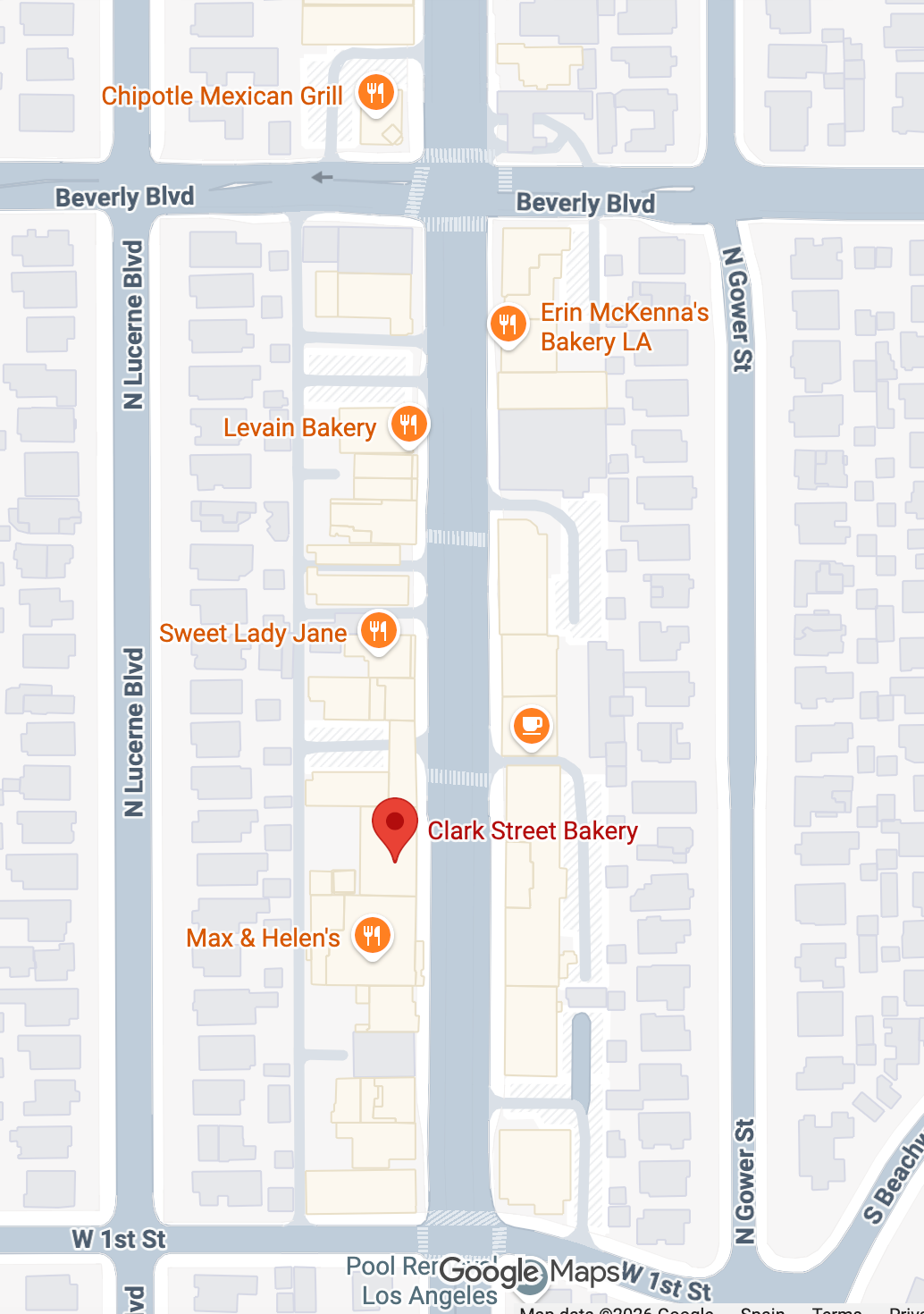
I flagged Clark Street Bakery because it’s where I’d spend an hour or so most mornings with a coffee and pastry.
While it was nice to have somewhere to walk to, hang out at a café, sit on a bench, and people watch, Larchmont—as a street in a neighborhood—is a poor excuse for a main street. It’s a poor excuse for really any type of commercial corridor for three primary reasons.
First, the mix of businesses is terrible. When we lived near Larchmont, there was a local bookstore (still there, I think), a local Italian sandwich shop (also there, I think), an overpriced but good New York pizza joint, a Rite-Aid, at least three ice cream shops, and a ton—I mean, a ton—of coffeeshops. And other assorted services (e.g., postal store, FedEx copy shop), retail outlets (e.g., clothing, beauty), at least three banks, and a few restaurants.
As of today, the pizza place and the Rite-Aid closed, one of the ice cream shops shuttered, and there are even more coffeeshops than before.
When all is said and done—because two of them are preparing to open—there will be a total of seven coffeeshops on this one-block stretch of Larchmont. Seven—Clark Street, Alfred (coming soon), Chamberlain (coming soon), Go Get ‘Em Tiger, Groundwork, Peets, and Starbucks. And I didn’t even focus on the other places where you can get coffee, places where the focus is on baked goods or where they serve substantial food.
Bottom line—Larchmont as part of your daily routine or as a destination is just lame. It’s better than nothing, but you can’t do much. It gets boring and redundant after just a couple of hours. Maybe less if you’ve been there before—or every day.
Business mix means so much. As does having housing on the same street as the businesses—a feature that’s not part of many, if not most main streets. Those two types of mixing account for a large part of the reasons why my current neighborhood (Russafa in Valencia, Spain)—and others like it—maintain a vibrancy that rarely stops and never gets old.
We have a ton of coffeeshops and cafés within short stretches here as well, but it also feels different due to apartment buildings anchored by retail, no above-ground parking lots to speak of, ample public space, neighborhood centers such as plazas and the municipal market, and near-24/7 activity largely powered by ground-level “terrace” seating along many of the sidewalks throughout the district.


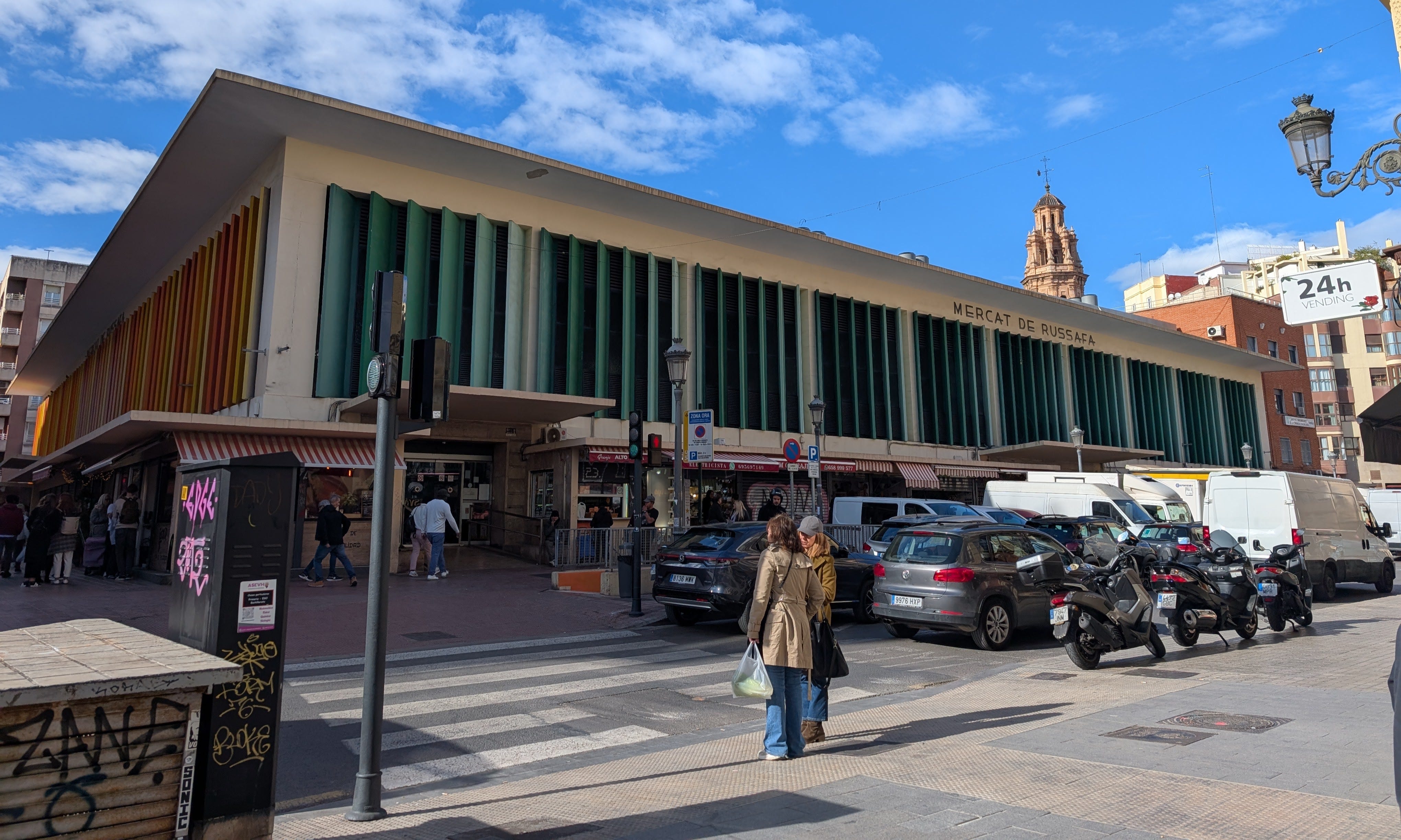
This is the problem with the response you often get when you refer to how much more vibrant life is in European cities due to the aforementioned attributes. Americans like to say that the United States has the same in New York or San Francisco. But it really doesn’t. Those places reflect the best version of American urbanism, but they still fall far short of—and often feel like aspirational prototypes of—even relatively typical lively districts across Europe.
The main street concept often fails because it fetishizes a hybrid of American and European urbanism and attempts to mix it with ingredients of suburbia, such as the suppression of activity in the name of noise control and ‘safety’ and too much space for the automobile. You end up with nothing more than a sterile environment that’s one step up from an outdoor shopping mall with a deconcentrated food court.
Second, nothing stays open late on Larchmont—and there’s really nothing that can or should stay open really late.
There are a handful of restaurants on Larchmont. And they close between 9 p.m. and 10 p.m. While there is “a” bar—as in one bar in one of the restaurants—there are no establishments that operate primarily as bars on the block. The pizza place with $28 pies and $7 Coors Lights during happy hour (!) just closed down.
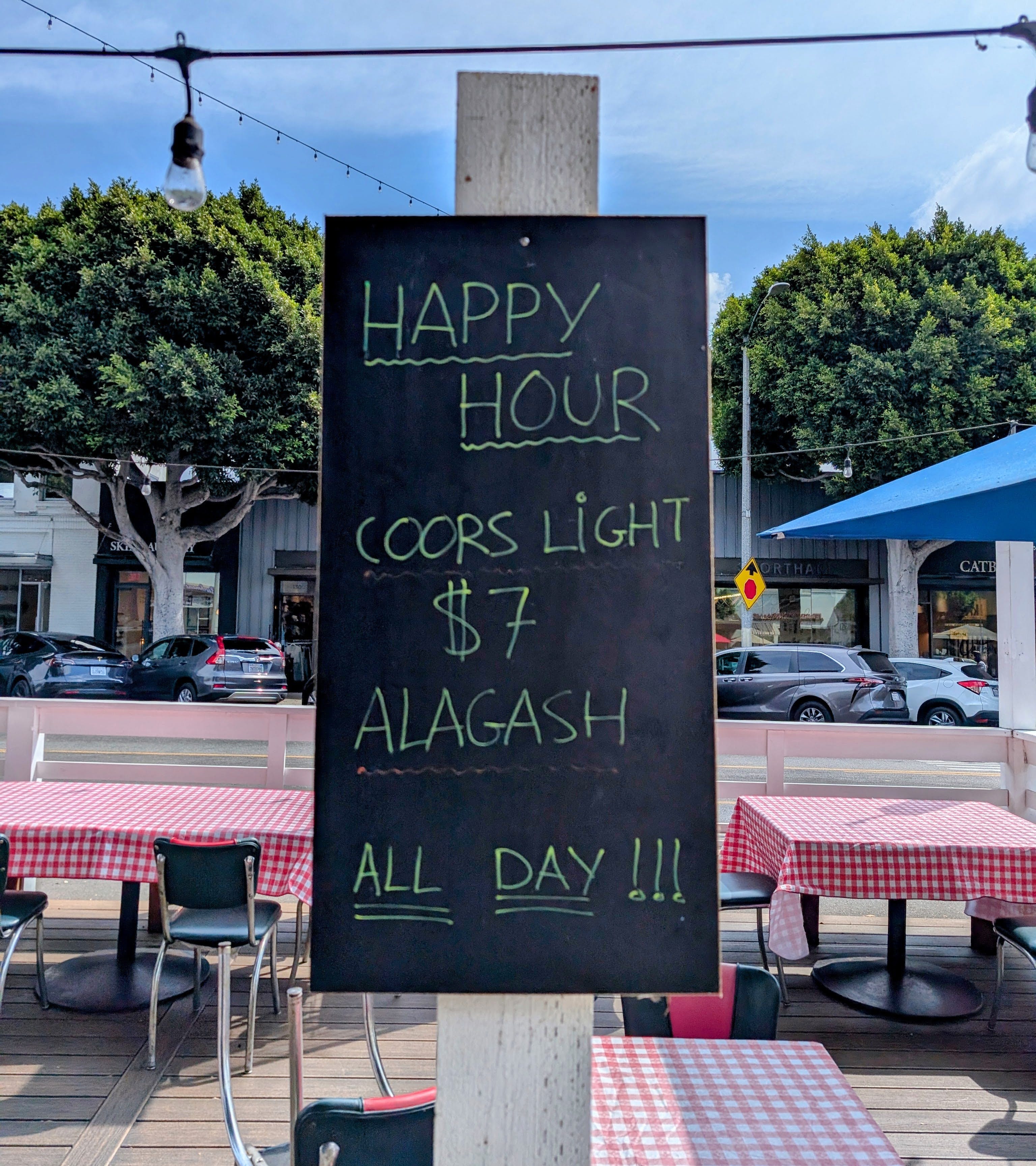
So you have no late night street life on Larchmont, which is really essential for commercial corridors like this. Many main streets lack places that stay open late, often because the neighbors, who tend to live almost exclusively in single-family homes on the blocks surrounding the main street fear the activity. But—in this case—activity doesn’t kill a neighborhood. As Jane Jacobs taught us, it can help keep entire neighborhoods safe—or, at least, safer than they might otherwise be—through the casual human surveillance known as eyes on the street.
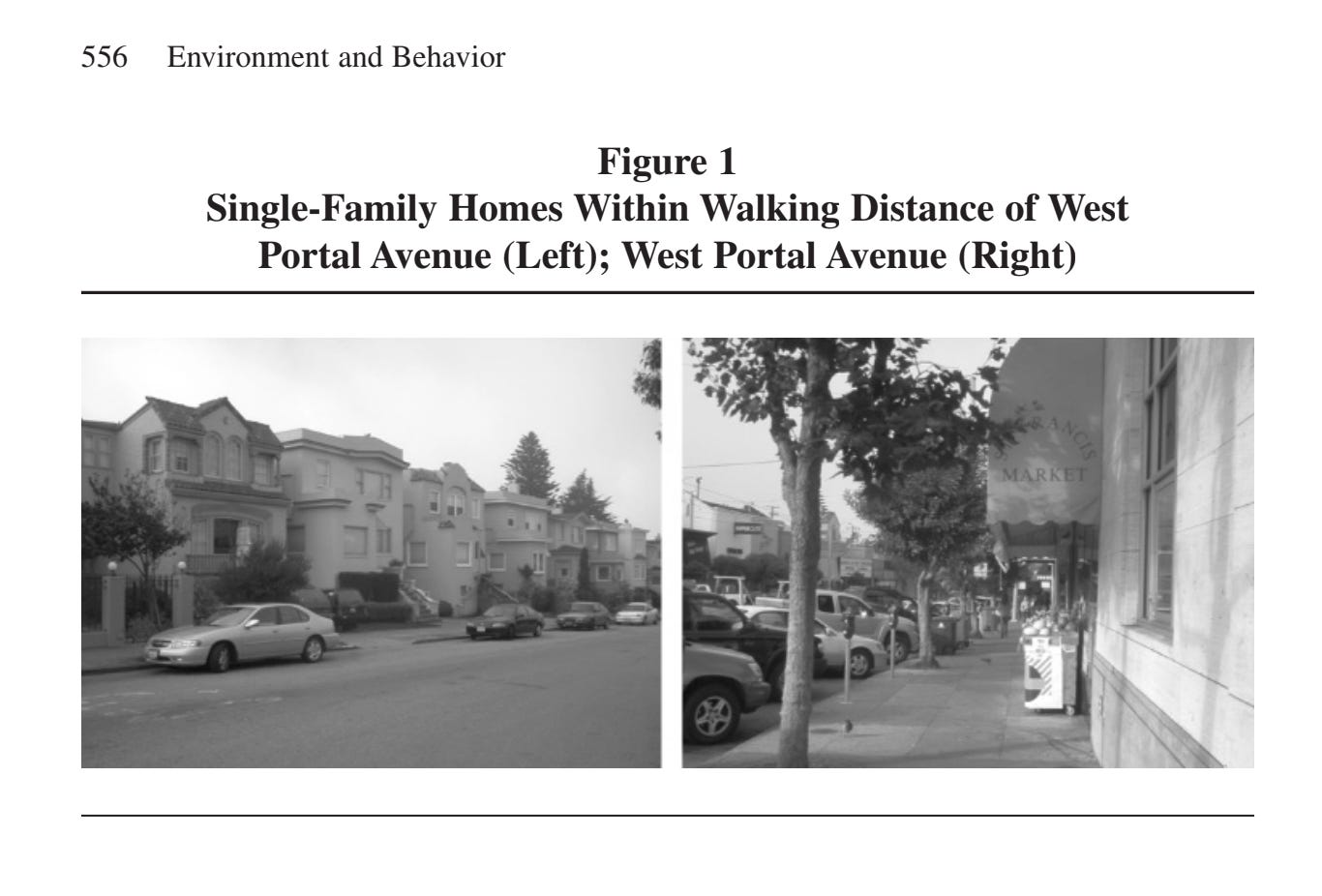
One of the neighborhoods we studied in San Francisco—West Portal—is a lot like Larchmont Village in form, but not function. West Portal’s main street has several bars, including some open until 2:00 a.m. It has become a true go-to spot in The City, not just a neighborhood people uncritically rattle off as “cool” due to a “farmers market” and abundance of $7 lattes.
West Portal isn’t the East Village or Russafa, but it sure beats the hell out of Larchmont.
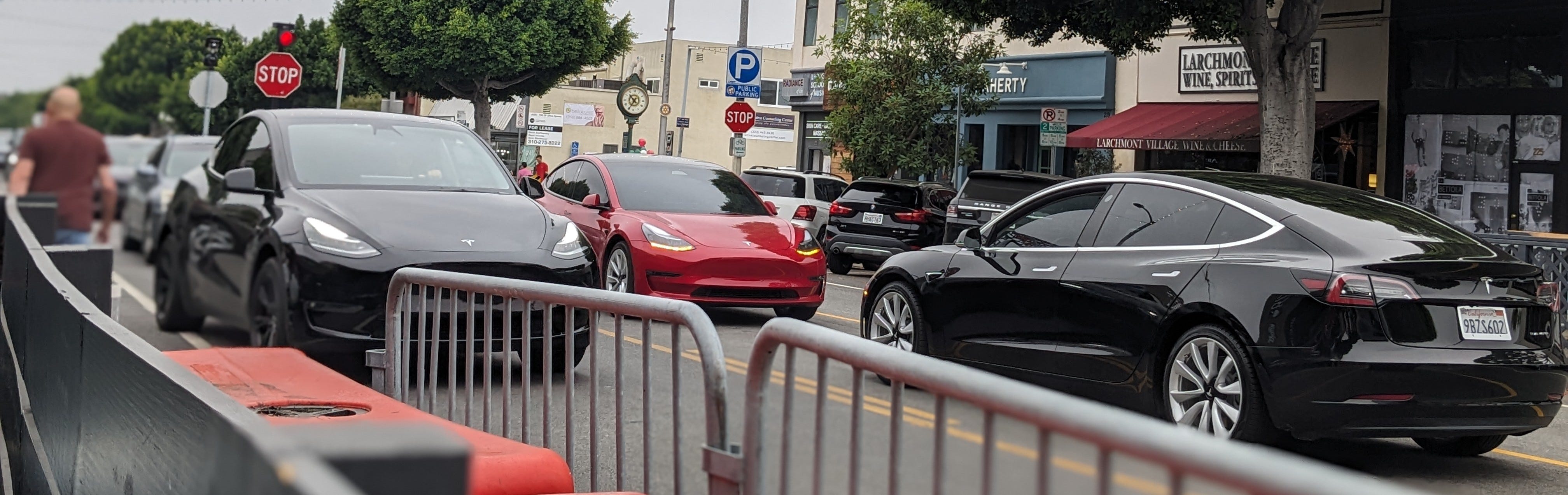
Third, cars dominate Larchmont. There are at least three parking lots on this one block stretch—one that turns into a “farmers market” twice a week. And Teslas often outnumber dogs, which is saying a lot. On the weekend, Larchmont looks like a traffic jam in search of people to pick up curbside.
The funny, sad, and bordering on pathetic part of all of this is that if you ask random people in Los Angeles what’s a good street to hang out on, there’s a good chance more than a few would say “Larchmont.”
In fact, if you ask Google Gemini where to hang out in LA, it includes Larchmont in the mix:
Larchmont Boulevard (Larchmont Village): The tight commercial strip between Beverly Blvd and 1st St. It offers a rare, slow-paced, small-town village aesthetic right in the middle of the city. It is tree-lined, highly pedestrian-friendly, and famous for independent businesses like Chevalier's Books, excellent gelato, and heavy weekend foot traffic.
You’ll see celebrities there all the time, too. I’ve seen Conan O’Brien and Aaron Paul from Breaking Bad. Phil Rosenthal, Molly Shannon, and other celebs live in the neighborhood so they’re always out and about. Phil owns the overpriced Max & Helen’s—shown on the map—that apparently commands a line out the door for some reason. People in LA—and the US—are just used to getting fleeced out of their money for very little in return.
The idea that anyone would return “Larchmont” when asked where to spend time in public amplifies the problem with the general public settling for less—less that often stems directly from urban planning decisions that lack cohesion, coordination, or conviction.
You can’t create great streets—main streets or otherwise—by using hard and fast rules that stifle vibrancy. There’s a difference between onerous restrictions on operating hours and alcohol service and firm design standards that create the coherent streetscapes people photograph while on vacation—here in Europe or, for that matter, in San Francisco.


This is where urban planning matters in ways that go well beyond whether a street has trees, benches, and a weekly farmers market.
Cities shouldn’t attempt to manufacture the perfect business mix. They should establish the conditions that allow a varied one to emerge: housing above and beside commercial space; small storefronts; fewer parking requirements; wider sidewalks; slower or no cars; restaurants, bars, and entertainment uses permitted without years of discretionary review; and operating hours that allow a street to function after nearby homeowners go to bed.
Of course, regulations need to exist around noise, garbage collection, street cleaning, and closing-time behavior. Enforce laws when businesses and people create actual problems. Address actual problems when they arise. Don’t legislate, regulate, and design the life out of a street to prevent every hypothetical complaint.
Regulate actual nuisances—not the existence of city life itself. Robust and vibrant city life isn’t a nuisance, nor should it be treated as one. It’s something to be aspired to and proud of.
As for main streets, they succeed when people have different reasons to use them at different hours—coffee in the morning, errands in the afternoon, dinner in the evening, drinks late at night—and when enough people live nearby to sustain all of it without turning every visit into a driving and parking obstacle course.
Larchmont provides the set dressing: trees, benches, recognizable storefronts, celebrities, expensive coffee, and enough foot traffic to look lively in a photograph.
It offers a sanitized image of urban life to people who don’t really want urban life.
What’s most incredible isn’t that Larchmont fails as a main street.
That’s hardly a surprise.
It’s that people routinely identify it as one of Los Angeles’s best.