

As long as you have a reasonable sense of what to expect and you’re up for the challenge, life abroad isn’t all that hard.
People who subscribe to the honeymoon period explanation sometimes set themselves up to fail. While that chronology might be a thing, it doesn’t have to define the experience of living in a foreign country. As I’ve come to believe, it can actually contribute to derailing it.
As you move through life—especially as you get older—I’m convinced you need equal parts eager enthusiasm, childlike curiosity, the ability to not be super dramatic about everything (or to catch yourself quick when you are), and decent intellectual and organizational capacity.
This is a recipe for living well, in general. It’s just that you grab the step stool for these ingredients so frequently when you live abroad that you end up realizing you’re better off leaving them on the counter.
If you go into a move anticipating a honeymoon period there might be a misalignment of expectations. It’s one thing if it’s explicitly stated that you’re setting off on an adventure. It’s entirely another if you’re scheduling that “adventure” for the rest of your life.
In that case, it’s no surprise that you end up falling off of this euphoric cliff everyone loves to refer to. And it’s no wonder that you find discontent in phase two and beyond.
Maybe you return home. Maybe you stay, but find every flaw in the place you apparently loved so much and couldn’t wait to call home.
Whatever.
Moving abroad doesn’t start to suck because of the honeymoon period. Or because of bureaucracy, language, or even loneliness. These are all manageable things that most adults should have a ton of experience dealing with by—at minimum—at age 20 or 30.
I mean—on language—I recently rediscovered how I learned English. I didn’t do anything special other than hear it, morph from babbling to speaking it, listen to it, and read it. So that’s how I’m handling Spanish—like a child with an adult’s body and (usually) mind.
Most of the people who write and “consult” others about moving abroad love to spend—waste—valuable time on all of these things that really don’t matter.
They make you feel like you’re not an adult. Like you suddenly forgot how to talk to a landlord, ask questions in a bank you’ve never been to, or self-soothe a little. All stuff that’s not always 100% easy, but well within the realm of manageable.
What people don’t expect—or don’t name because they’re too busy outsourcing the real psychological work to non-issue—is boredom.
The problem isn’t that life abroad is hard. It’s that it becomes ordinary faster than people are prepared for.
Maybe this is just me, but I feel like I’ve learned 49 years’ worth of stuff since turning 50 here in Valencia…
You can’t arrive somewhere and expect or even want to be walking on air every minute of every single day.
You can’t go along with the novelty wears off narrative in the Facebook groups, on the YouTube videos, or from your move abroad “expert.”
If you’re bracing yourself for the novelty to wear off, you’re screwed. You have not done yourself any favors. Whoever you listened to put you—or you put yourself—in the wrong frame of mind.
Do you hear people warn folks with a dream to play professional sports or be a high-end chef about the honeymoon period or the novelty wearing off?
You don’t.
Because folks in those and related areas tend to be highly-skilled adults. I know it’s not totally a parallel comparison because you have some real pieces of work in both professions.
But you see my point—showing up in a new country should be little more than you getting to the place you’ve wanted to be in a for a long time. Then, once there, you do your thing.
You worked hard to be there. Now, you do life there.
And life—as I’ve experienced it when it’s average or better—is extremely boring.
That word gets a bad rap. But I like to think of it as the opposite of constantly seeking and experiencing outsized emotional spikes and identity reinforcement.
Boredom isn’t emptiness.
It’s not unhappiness, tedium, or a mundane life.
It isn’t having and following routines.
It’s the absence of constant stimulation.
When people buy into this novelty narrative, they’ve created a narrative that’s not sustainable. Particularly if novelty does indeed wear off and every period—honeymoon or not—comes to an end. But if you’re bracing for some flavor of hard times at this unknown, but looming expiration date, you’ll confuse the boredom that sets in with something being wrong.
And you might panic.
That’s when you face the move-abroad crossroads I see so many people navigate in real time: they either become the externalizing complainer jamming up the Facebook groups with hyperbole and half-truths or they sit with themselves for a second, take a look within, and carry on with the business of doing life.
If you walk in anticipating constant excitement, your city will stop entertaining you.
In the beginning, everything is a project. Getting a phone plan can feel like an achievement. Finding the good bakery is a win.
We confuse this logistical busy-work with meaning.
But once you know where the bread is and you’re using WhatsApp like it’s second nature, you’re left with the one thing you can’t outrun: the continuation of real life.
Of doing real life. Which, by the way, will constantly come up.
Personal case in point—
Right before we moved to Spain in November 2024, I lost one of my main freelance clients. No fun, but I’d been there before. So I regrouped and replaced the income in short order.
Earlier this month—in 2026—the same thing happened. So I’m back in familiar territory. And I’ll regroup.
As the 2024 and 2026 comparison makes clear, this could’ve happened anywhere. Los Angeles. Valencia. Anywhere life is actually being lived instead of scripted with the help of social media.
That’s the part people miss when they romanticize or catastrophize moving abroad: real life doesn’t pause just because you changed geographic position.
In fact, in some ways, the pressure increases. Not because the place is harder, but because you care more. When you’ve built a life you genuinely love, the stakes feel higher. You’re right where you want to be. You’re focused on maintaining and growing something that finally feels right.
That’s the version of stress people confuse with something being wrong.
And it often only becomes visible in boredom.
That’s a part of doing life I don’t love having to navigate. But I don’t hate it either. It’s a challenge — and a way to chart a course you might have otherwise never pursued.
Really, the rush to replace the income doesn’t have much to do with fear. It has more to do with returning to what doesn’t sit well with some people—everyday life.
I love it here so much.
After we arrived, I couldn’t wait to establish everyday routines. If your everyday routine—combined with some travel or whatever you like to do—isn’t enough, you’re probably not facing a move-abroad problem. There’s also a good chance the place isn’t the problem, assuming you made a reasonably well-considered decision on where to move.
Most people treat boredom like an alarm bell—a signal that they chose the wrong city or the wrong life. They think they need to move again or complain to anyone who will listen.
They’re wrong.
Boredom isn’t a sign of failure; it’s a sign of arrival. It means the environment has become your backdrop instead of an obstacle—real or imagined. It’s the moment when living abroad stops being a personality trait and starts being a life.
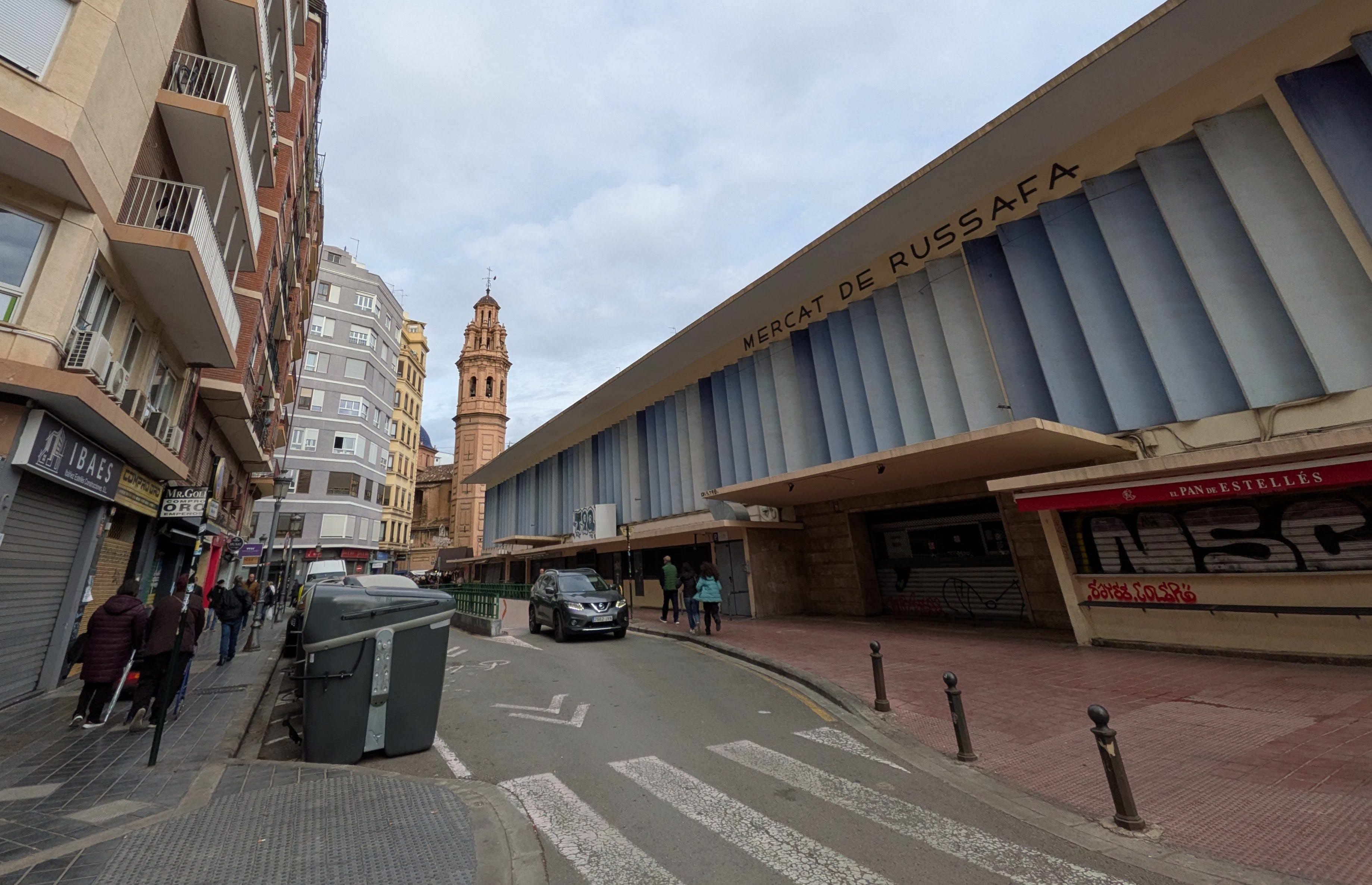
If you can’t handle the ordinary, you’ll never thrive in the extraordinary place you worked so hard to get to. The real challenge of Spain—or anywhere else—isn’t the language or the paperwork. It’s whether you’re fully content to sit in a quiet plaza on a Tuesday afternoon and not feel like you’re missing out on the world.
That’s the work. The rest is just scenery.
Loved this bit: Boredom isn’t a sign of failure; it’s a sign of arrival.
I have been thinking about this in the context of our imminent, as in “happening tomorrow”, move to spend 8 months of the year in South Africa.
We lived out of our main house 8 weeks ago. We’ve been between our new main house in the mountains, my mother-in-laws place and a couple of trips to the UK to watch football.
But, no real routine!
Getting to South Africa and getting into a routine comes next. Next stop “boredom”