

A version of this article appeared on Medium last week and generated one of the strongest reader responses I’ve received this year. I want it to publish it here too—because these five words help connect much of what I’ve been writing about for the last 25 years.
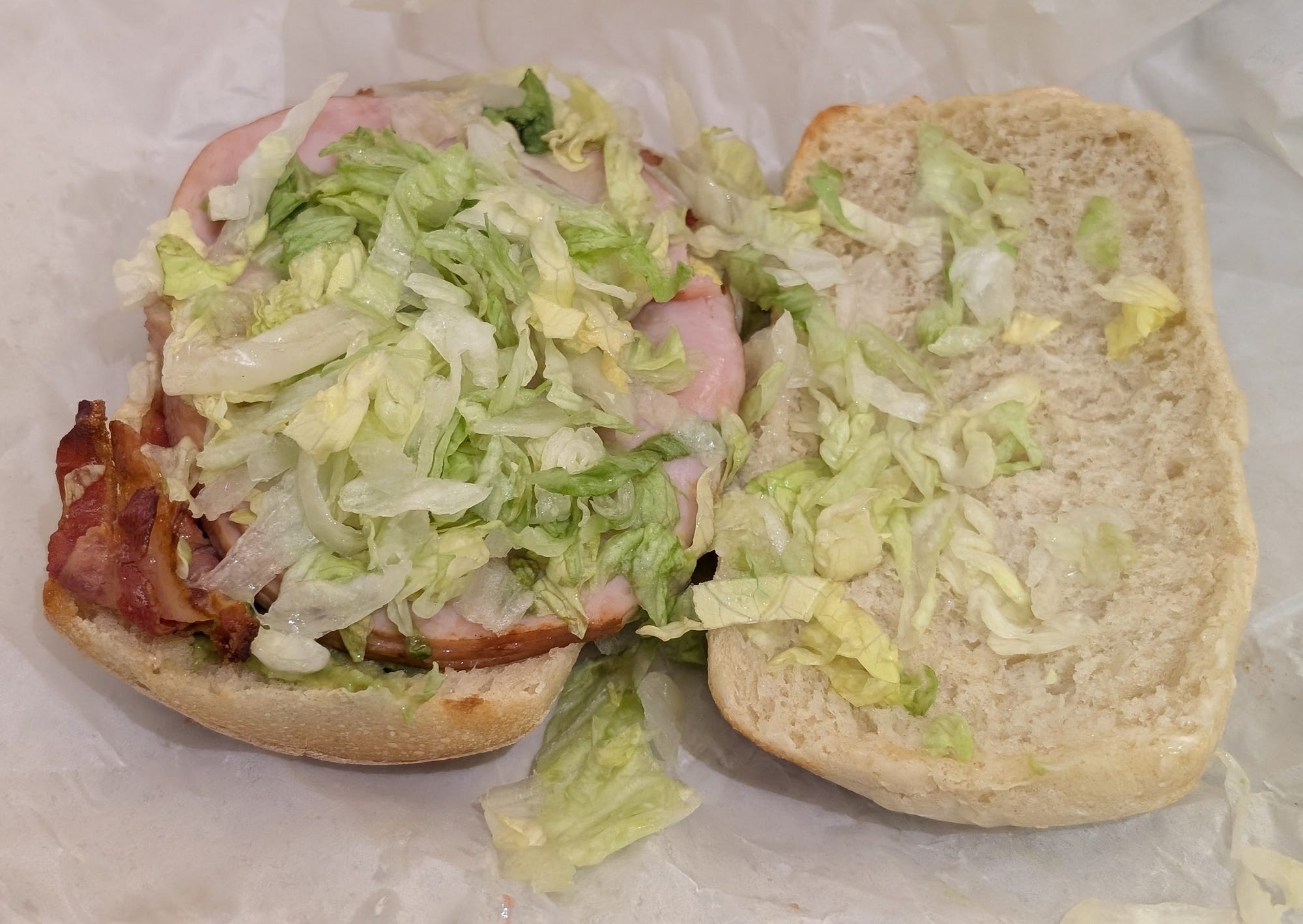
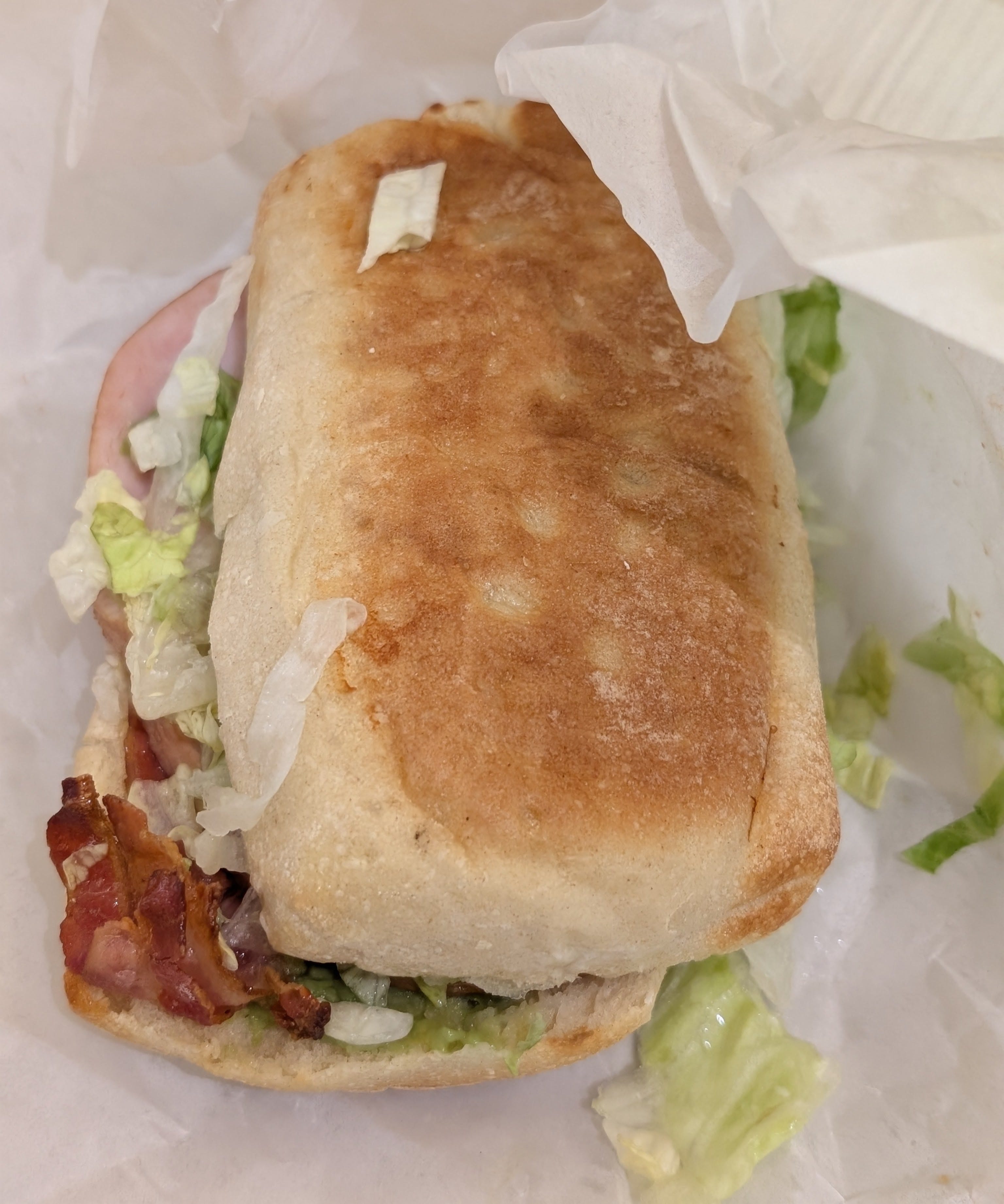
That image is part of the last “meal” my wife and I had in the United States — on January 2, 2025 at LAX—before moving to Spain.
This sandwich and its counterpart were disgusting. Both flirted dangerously close to twenty bucks.

It’s telling that the sentence readers highlighted most in one of my recent Medium articles calls out a quintessentially American phrase.
The fact that Americans utter these words with such frequency speaks volumes to how brainwashed the society has become. And I’m not just talking about self-proclaimed patriots who continue to buy the American myth. I’m talking about everyone, including myself.
I used this phrase so much over my final four decades in the U.S. that I wanted to punch myself in the face.
That’s probably one reason why it is what it is has become such an American thing to say.
It is what it is.
Count how many times you say that in a week. Or maybe you don’t. But you know people who do. And there’s no doubt that more than a few people — after searching for hours to save on travel expenses — have dropped too much money on shitty airport food. As they get fooled again, all they can say is… it is what it is.
Having this automatic response gradually became normalized on larger issues that matter.
Consider an example.
You have a drinking glass you really like. You drop it. It breaks. After the initial upset, you say, “it is what it is.” Because it really is what it is. What are you going to do — remain irritated for the rest of the week because a glass broke?
We’re hardwired to overcome things like this.
The problem starts when we apply the same logic to things that aren’t inconsequential in our lives and in the grand scheme of things.
How many Americans would respond with “it is what it is” if you said to them, isn’t it weird that you have to drive less than a mile to go to the supermarket? Or that you have no choice but to commute by car for an hour to get to work? Or that the only way to lower your monthly healthcare premium is to accept a higher deductible or copay.
A broken glass is what it is because you made a mistake.
But most of the conditions we’ve learned to shrug at came to be thanks to people and policy. Then, markets reinforced them on the slippery slope to societal acceptance.
Acceptance is healthy when reality can’t be reversed. Resignation is pathetic when the thing you’re accepting is a choice somebody made. And when — to top it off — you have someone either telling you it’s your fault or that it’s a sacrifice you should have no problem making. Or — if it could get even worse—when your wealthy leaders lie to your face and tell you that the reality you see in front of your eyes is fake.
Some Americans still kick and scream in resistance to all of this and the connected themes I’ve been writing about for 25 years. Then there’s the sizeable rest of us who know something is wrong, but ultimately use it is what it is as a defense mechanism. Sort of like the psychological need to get over the broken glass, a point comes when you feel like you have no choice but to get over the larger societal ills the United States has normalized.
That’s one outcome of hopelessness.
I’ve been hopeless over the state of the nation for a long time. I always knew something was wrong — politically, socially, culturally. I spent years imagining a better way and, when I could, hacking together pieces of one.
I lived in cities. I rode my bike — even in inhospitable environments. I studied urban planning long before I ever thought about leaving the United States. I advocated for progressive politicians and against chain stores.
I was hardly passive amid the dysfunction. But, at some point, our favorite go-to phrase took over. Fighting the good fight suddenly seemed futile.
That’s it is what it is in the shell of a pretty sad nut.
Then I spent time in Europe.
Actually living here has proven something important to me:
I wasn’t romanticizing day-to-day life in the continent’s urban places I’ve experienced.
City life really can be better.
From my bread-and-butter perspective — how cities function by design — the differences are impossible to ignore. And once you’ve seen various degrees of better, particularly in day-to-day life and the systems that support it, it is what it is falls apart. Because you’ve suddenly had it confirmed that it isn’t just what it is.
A city where you need a car for practically everything, a two-hour daily commute, a system that punishes you financially for needing healthcare — these aren’t just the hard facts of life.
These are choices.
And the United States has always and continues to make a lot of bad ones.
Much of Europe made better ones — not all of the time on everything. But often enough, particularly in the areas that shape day-to-day urban life, to prove that the American way isn’t destiny or some unavoidable reality.
Acceptance makes sense when the glass breaks. You can’t unbreak it.
But transportation systems, healthcare schemes, housing policy, urban design, and the thousands of decisions that determine how we experience life are choices governments made and societies accepted long enough that they eventually started to feel inevitable.
That’s the trap.
When it is what it is stops being a healthy way to accept reality and becomes a way to rationalize settling for less.