

You can break down almost everything you encounter in the world into systems. Then, you can riff on whether they work—or not.
That’s what we do here each week.
If this resonates… and you want to support an honest, practical, unfiltered version of what it actually means to build a life at home and abroad—at midlife:
How It Works (and Why It Doesn’t) is 50% off right now.
And if you pay in euros, I’ll add an extra 30 days free.
Now—a special Saturday edition about dining out in Spain and around the world.
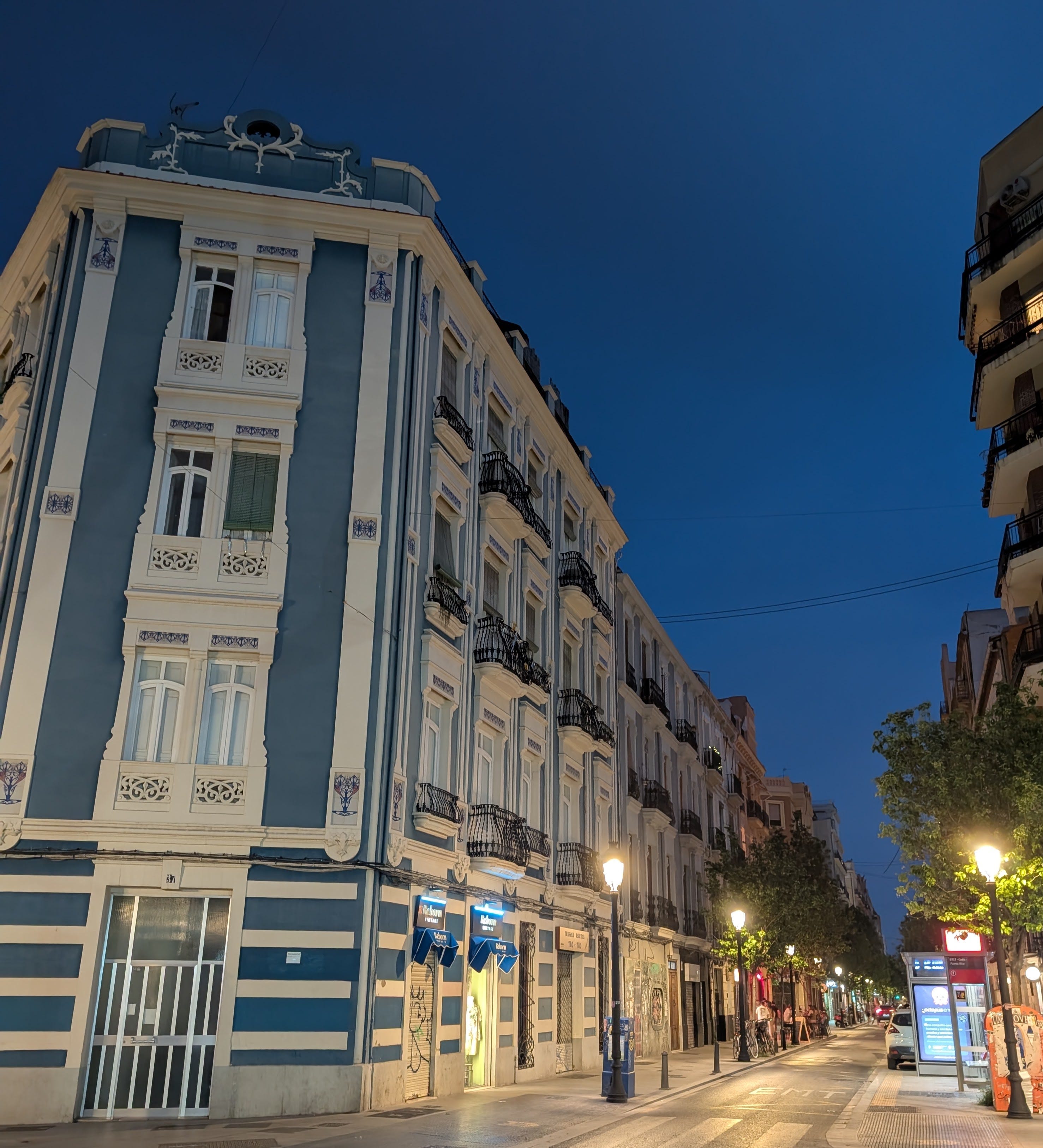
My wife and I walked into a packed Vietnamese restaurant in Valencia’s Chinatown a few weeks ago. We didn’t have a reservation, but the host/owner found space for us.
Now that we want to go back, I tried to book properly.
Except they don’t answer the phone. They don’t have online reservations. They barely have an Instagram presence. And when I messaged them, I got nothing.
So the other day, I walked over (as part of a nice 3.5km journey through Valencia!) and booked in person — old-school.
Some people would find this frustrating.
But after the last few years — first in Los Angeles, now in Valencia, Spain — I’m starting to think the opposite:
A smooth reservation system, a curated social media presence, and slightly-too-high prices are restaurant red flags.
Because they usually signal the same thing: A place that’s more concept than kitchen. A place optimized for volume more than craft. A place where the chef is a brand, not a person in the room.
People talk about the shrinking middle class. Apply that idea to dining out and it’s dead-on.
The middle of the dining world — the €60–€200 category — has quietly become the worst deal in the entire restaurant ecosystem.
And here’s why.
The high-end restaurants still have intention — and the cheap ones still have soul.
As Bruce Springsteen wrote, we’re all just searchin’ for a world with some soul. If you can’t find it in food, we’re really fucked.
Let me give you two examples from my own week (one with soul and this one without!):
The “middle-tier” place that felt like a content farm. We recently went to a well-known restaurant in Valencia — the chef is Michelin-recognized, the marketing is excellent, the concept is everywhere.
The experience?
A €97 cattle call.
You show up in a pack at your assigned time, cram into a crowded vestibule, then get ushered to one of dozens of tightly packed tables. The menu is huge, scattered, trying to please everyone and therefore pleasing no one.
Everything was technically fine. But nothing tasted connected to the person cooking it or fulfilled the odd promise of a blend of Mexican, Japanese and New York flavors. What does that even mean, other than that we poorly riffed on the mentioned cuisines across a completely incoherent menu?
It’s a brand pretending to be a restaurant.
You can feel it — the anonymous kitchen, the franchise-level precision without any emotional imprint, the sense that this place was built to scale, not to nourish.
This is what the middle tier has become: high prices without high intention.
Meanwhile, the €10–€50 places? They’re truly cooking not only with heart, but with their whole chest.
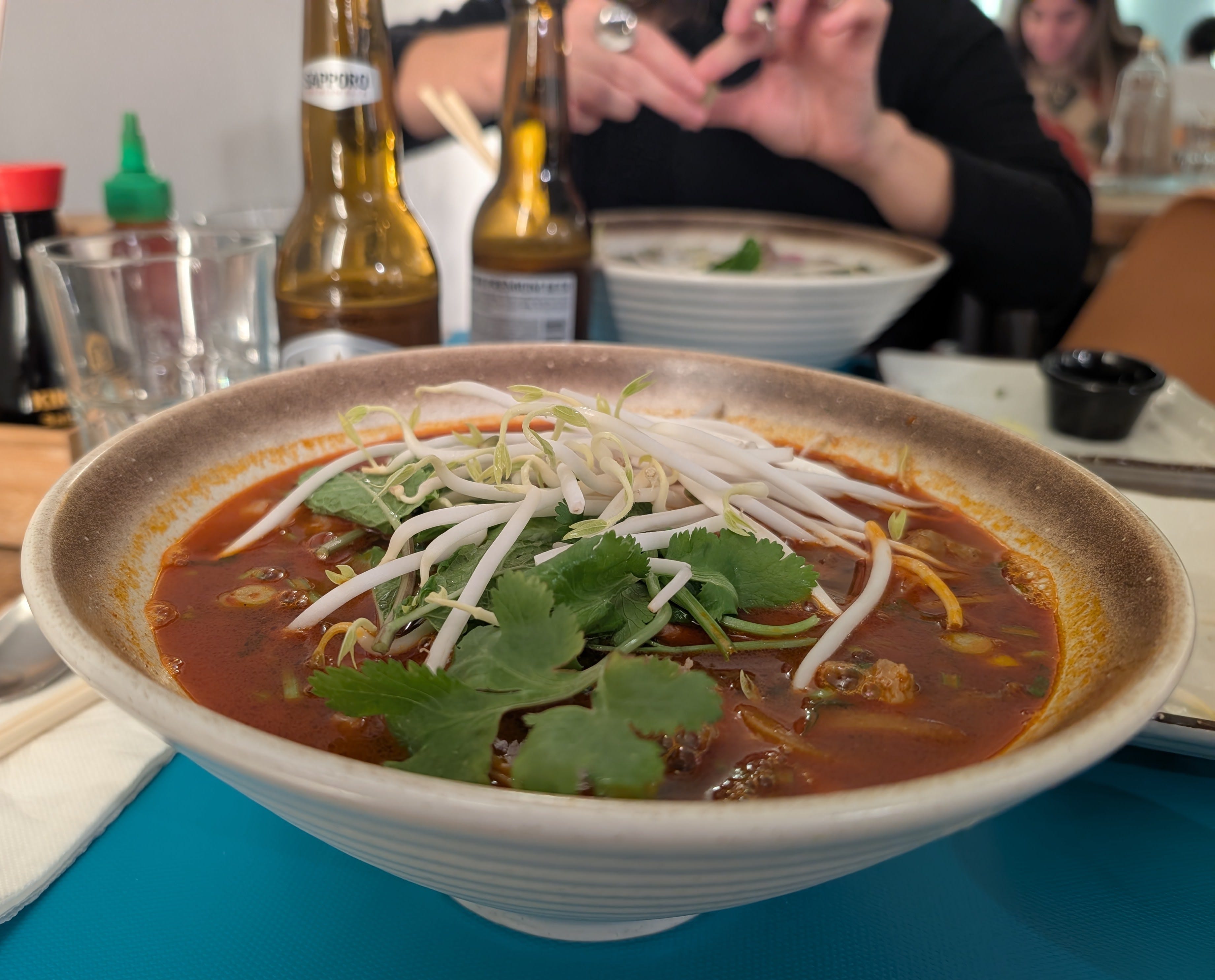
Our Vietnamese spot?
One way-too-busy lady running the floor. Her daughter running the plates.
The kitchen banging out food faster than the law should allow. Everything hot, fresh, seasoned with actual conviction.
No branding. No curated vibe. Just food that tastes like someone cares. From — presumably — a family who the lady told us used to have a Vietnamese restaurant in Paris. I inquired after seeing the language on the card reader in French.
The same with so many family-owned Spanish spots, many that are not run by Spaniards!
Same with neighborhood Japanese joints. Same with small Indian, Thai, and Chinese restaurants that don’t need a “concept” because the concept is good food cooked by real humans.
You feel the difference immediately:
More flavor
More generosity
More care
More consistency
More attentiveness
More joy
And it cost — using the Vietnamese place as a representative example — €52.40 for two people, including four beers. (In the US, maybe the beers alone would’ve cost $50, but the larger point here is universal).
These places aren’t trying to be anything. They’re simply trying to feed you well.
And the high-end places — the true high-end — still justify their price.
This is the irony nobody talks about:
The €200+ restaurants haven’t declined.
The €40–€60 restaurants haven’t declined.
It’s the €80–€180 ones that have fallen off a cliff.
The high-end spots (like a Michelin-mentioned one here in Valencia we’re going to in a few weeks for our anniversary) are still chef-driven.
The chefs are in the kitchen. The menu is intentional and edited. There are 8–12 tables, not 60. You’re paying for craft, not throughput.
It’s expensive — but it feels worth it.
Compare that to the bloated middle:
Too many concepts.
Too many tables.
Too many dishes.
Too little purpose.
They’re chasing scale, not aiming for longevity and to be part of the neighborhood.
Why the middle tier is collapsing
Here’s my working theory — and this is where the system break shows up.
Middle-tier restaurants today suffer from the worst possible combination:
Scale without soul. They want the revenue of a chain but the reputation of a boutique. It’s impossible.
Overhead that forces mediocrity. Rent, staffing, branding, concept-building — it all requires volume. Volume kills intention.
A “play-it-safe” menu that tries to please everyone. Which means nothing is great. Everything is… fine.
Just fine food at €60–€120 is the worst deal imaginable.
Chef-driven in name, not practice. The chef’s name is the brand. The team actually cooking your food might never have met them.
Diners who are tired of paying premium prices for mid-tier experience. And they’re right. I know I’m tired of it and about done with it.
Restaurants should either be:
soulful
intentional
or cheap
What this means for people who actually love eating out
If you’re like me, you don’t want dinner-as-spectacle. You want a place that makes you feel alive. They said some melodramatic stuff on The Bear, but that scene in the last season — about people going to restaurants because they want to feel good — that’s the reason why I worked in hospitality and put everything I had into it.
Here’s the unfortunate truth:
The only consistently good meals right now are either humble or elite.
The middle has no identity left.
It’s the same in Los Angeles, Valencia, Paris, wherever I’ve lived or traveled:
The small spots punch above their weight.
The expensive spots justify the splurge.
The middle feels like a trap.
And yet — that middle used to be reliable.
It used to be the foundation of a city’s dining culture.
It used to be where chefs honed their voice.
Now it’s where creativity goes to be monetized.
What’s the solution? (It’s not what people think.)
The answer isn’t:
more reservations
more concept restaurants
more branding
more “Michelin-recognized” anything
The answer is fewer tables and more intention.
The restaurants that will survive aren’t the biggest or the flashiest.
They’re the ones that still cook like they’re serving a community. They’re not using their first space as a launching pad for more concepts.
Why this matters more than food
Eating out isn’t about consumption. It’s about feeling cared for by a place and the people running it.
That’s why the middle-tier decline hits so hard: It represents the erosion of something deeper.
You can feel when food comes from real connection — or when it comes from a spreadsheet.
And more and more, the places in the middle are choosing the spreadsheet.
Spot on! This has been my exact perception in Los Angeles for the past few years. I now refuse to dine at these “middle” restaurants because I feel cheated and sometimes downright scammed when the bill arrives with ticky tacky little extra charges like 3% for using a credit card. I could go on but wouldn’t be telling you anything you don’t know. I only go to small neighborhood places or - because I can afford it - the super great and expensive place now and then.
100% agree with this take. There is a burrito place tucked into the back of a market here that fits the “soul” bill to a T. They’ve got (maybe) 3 options, you order and pickup at the counter, and if you’re lucky, can grab one of the 5-6 tables. Anywhere full of local workers/tradesmen is a huge green flag.
Going the other way, there are plenty of restaurants here that are long on pretension and short on delivery. That mismatch of expectations and reality is most maddening of all.