

Two years ago, before we moved to Spain, I wrote the piece below.
Reading it now is wild.
Valencia turned out exactly as I imagined.
Lately, I’ve spent a lot of time writing about certainty—specifically how much of the relocation industry claims to provide it. The spreadsheets, scouting trips, masterclasses, consultants, and endless checklists all promise some flavor of the same thing: confidence—reassurance or confirmation—that you’re making the right decision as a way to help ease what should be natural anxiety.
But looking back, that’s not what happened here.
My wife and I weren’t certain about every detail, but we had a general picture in our minds of how things would look. We had an idea of where we’d live and what daily life would feel like, but less of an idea around who we'd meet or what challenges would come with the move.
You see the distinction we’ve been discussing emerge right there: Some of what you’re doing is making well-considered, educated guesses. Some is just what life always looks like, regardless of changing places.
What we were 100% certain about was the kind of life we wanted—and how Valencia could provide it 24/7 in ways the United States simply isn’t capable of delivering on.
That turned out to be enough.
The article below didn’t predict the future as much as it proves that the real work happened before the move. Before visas, paperwork, apartment searches, and all the other logistical details people obsess over.
We already knew what we were looking for—and why.
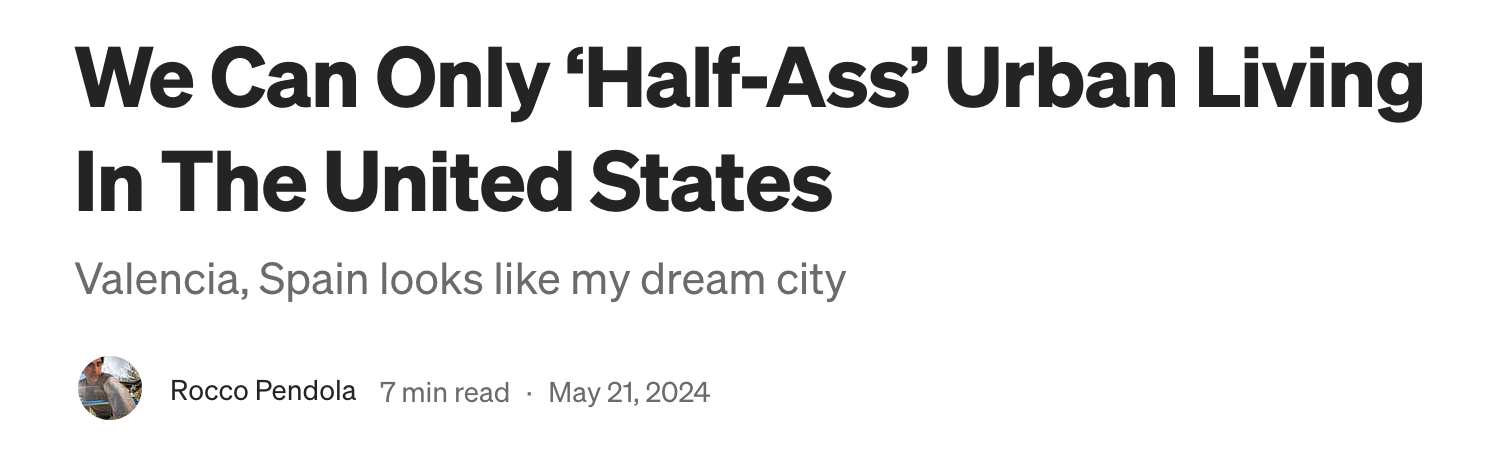
In less than 8 months, my wife and I are moving to Valencia, Spain.
As I said the other day, it’s going to be great to live in country where I’m more than happy to pay taxes. It’s also going to be something else to finally live in a place that provides the type of urban living I have dreamed of since first setting foot in San Francisco in 1999.
People sometimes say that San Francisco is the closest thing we have in the United States to a European city. And, while this might be true, don’t let the comparison fool you into thinking that San Francisco is anything like a European city.
I lived in San Francisco from 1999 to 2006. I fell in love with cities and studied urban planning intensely there. I used to walk around somewhat sanctimoniously, acting as if San Francisco was an urban gem.
Don’t get me wrong. I love San Francisco. It is great.
I go back frequently to visit my daughter. And we’re looking forward to spending a week or so there in June to cat sit for my kid. She lives in what might be the best urban neighborhood in America.
But—after finally having made it to Europe in 2022—that’s all you can say about solid examples of urbanism in the US.
They’re the best in America.
They don’t hold up—at all—to even above average examples of great city building and planning in, at least, the Europe I have seen (al menos en la Europa que he visto).
This isn’t as much a criticism as it is reality without rationalizing.
Many people in American urban planning tend to overstate the greatness of our cities. They know Europe is better. They wish the US was more like Europe from an urban perspective. So they fool themselves with these comparisons.
That was me throughout my eight years studying urban planning in San Francisco and Southern California. I so badly wanted San Francisco to be one of these places my professors spoke so highly of. As the best examples of urban living the world has to offer.
San Francisco is a lot like Lisbon or Barcelona.
San Francisco, as much as I love it, isn’t a pimple on Barcelona’s ass (un grano en el culo de Barcelona). And I’m confident I’ll say the same in relation to Lisbon within minutes of setting foot in that city, hopefully in the next year or two after the aforementioned move.
As far our future home Valencia goes—
Valencia is the green capital of Europe and, based on what I know now and the confidence I have in what I know, the perfect place to Never Retire, if you love city living.
We can’t have nice things like Valencia or Barcelona in America.
And it’s mainly because (here’s the roughest and quickest sketch of what you learn when you major in urban planning)—
In the 1950s, the United States decided to build freeways and dismantle public transportation. This, along with other wartime and post-war initiatives, paved the way for suburbia and increasing DISinvestment in cities that persists to this day.
Americans—thanks largely to this political and social conditioning—don’t like cities.
We have a car culture that—even in places like San Francisco—won’t budge. At least not by enough to matter.
Our national attitude is pretty much anti-urban.
That’s the clean version.
Even people who live in cities—and there are more than a few who contribute to the high cost to live in many of them—hate them. They’re—often uninformed—self-hating city dwellers. Or people who own a business in the city and live elsewhere.
I could go on all day with examples, but here are just a few. From San Francisco.
There was a horrific accident that took the lives of an entire family in San Francisco several weeks ago at a corner by West Portal Station. I spent a lot of time in that neighborhood doing research while in college. It’s like a cute little Main Street town within the city.
In response to the accident, The City wants to make some pedestrian safety improvements, which would result in the loss of some parking places. There are people in the neighborhood who oppose it.
After a center bike lane was installed on Valencia Street (no relation) in the Mission District, business owners started blaming it for their problems. One restaurant owner even—apparently—went on a hunger strike.
These people haven’t read the research on removing parking and improving pedestrianism. And even if they did, they wouldn’t listen because they know what they know and they know what they know.
Meanwhile, the San Francisco Chronicle published a comical article the other day saying that car owners in the city “feel under siege.” So much change, particularly “Protected bike lanes … Less parking … Streets that favor pedestrians … Bans on right turns at many red lights” makes car ownership in the city “miserable.”
Um. That’s kind of the point.
But try driving in cities—large and not-so-large—in, say, France, where low-emission zones and other restrictions have become a thing. Similar policies aimed at curbing the car have been or are in the works across Europe, including in Spain. And these are places at the forefront. They don’t have strong and oppressive car cultures. Yet, they’re still making incredibly impressive, groundbreaking and smart urban planning decisions.
Anyhow, the “best” parts of the article noted that all of these changes are “scaring seniors into staying home” and focused on drivers who essentially feel discriminated against.
Mind-blowing really.
These people must not be familiar with the endless amount of research on how car dependency and car culture isolates the elderly. But, of course, take one example of one person in San Francisco and make that a thing.
Our cites are effectively built for the car. Everybody and everything else has to fight for space. You need eyes, not research for this.
Even in San Francisco.
Anyhow, Valencia isn’t without its challenges (its government recently took a shift towards the right), but it was just crowned the green capital of Europe. And the incredible thing is—Valencia could stop what it’s doing now—and still be head and shoulders above any American city from the perspective of any sane city lover. Even if it didn’t do the things that helped it earn this honor, it would Trump our brand of Cracker Jack box urbanism.
Everything in italics is from a CNN article—
The European Commission cited Valencia’s 5 million square meters of green space. According to the Commission’s Report, 97% of residents live less than 300 meters from a major green area.
After a deadly flood in 1957, the river was redirected and the Turia was slated to become a multi-lane highway. Public opposition thwarted the development, however, giving rise to a movement that demanded more green space in the city center.
To be fair, New York City also beat back a freeway that would have cut through Greenwich Village around the same time. After the 1989 earthquake, San Francisco did not rebuild the freeway that paralleled its now beautiful and vibrant waterfront.
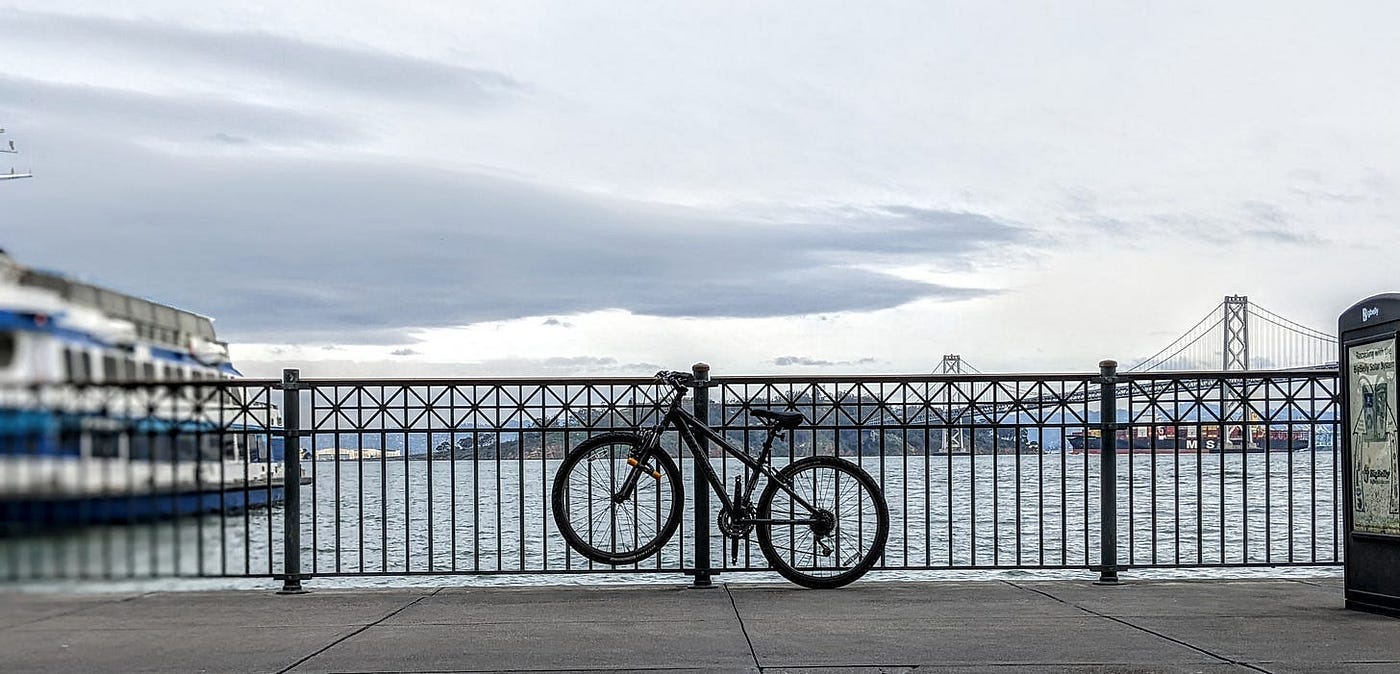
The Turia also functions as a sustainable transportation highway. Designated paths run along the length of the park making it ideal for commuters on bicycles and electric scooters to cut through the city and avoid street traffic.
A love of cycling is what led Giuseppe Grezzi, an Italian transplant to Valencia, to get involved in local politics, eventually becoming the city’s councillor of sustainable mobility for eight years. His proudest achievement: increasing bike lanes in the city by more than 50%.
During his term, the city poured money into sustainable transport, expanding a new metro line, installing public bicycles and augmenting nearly 200 kilometers (120 miles) of bike paths that link to several “green routes” out of the city.
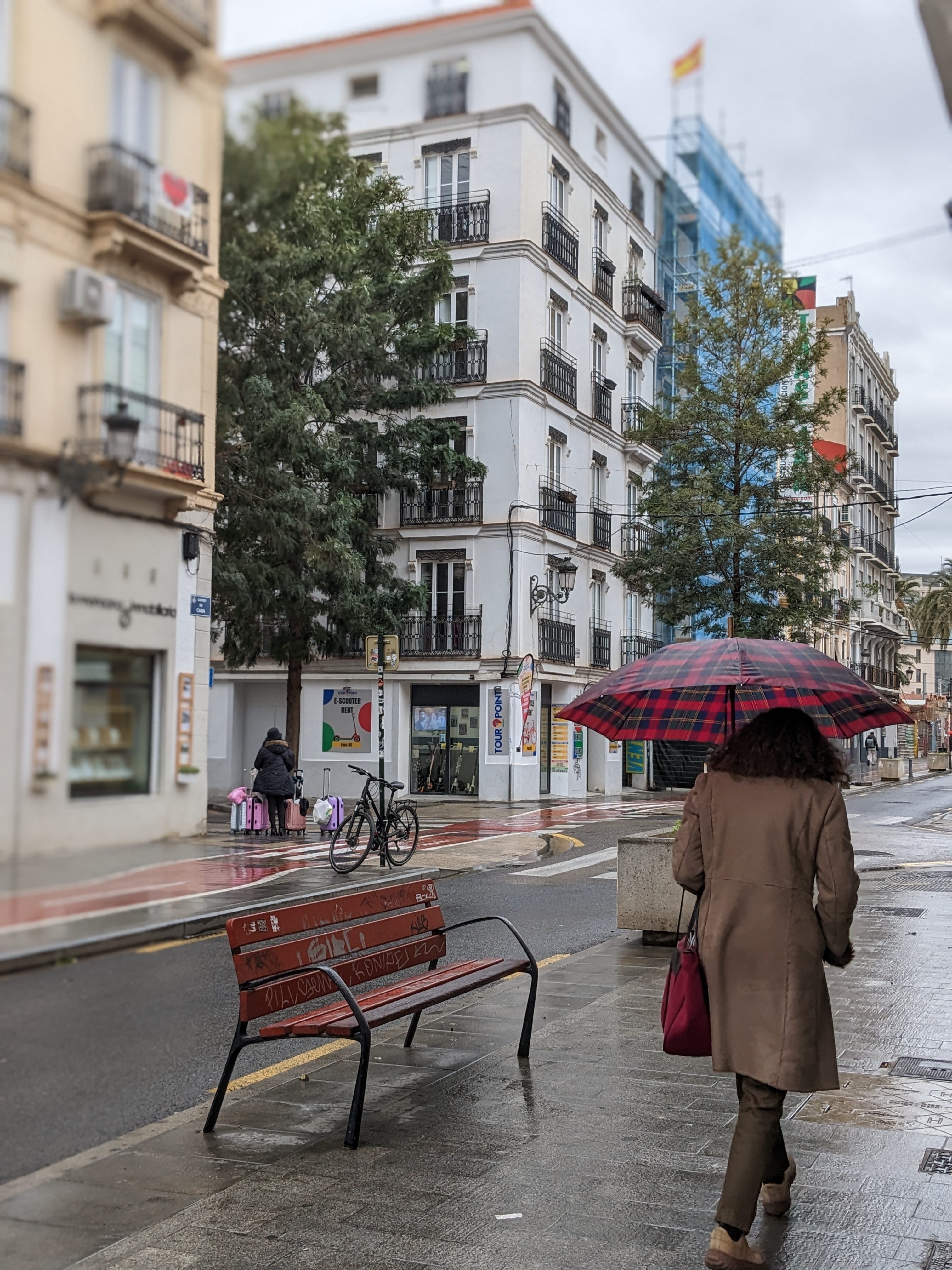
During the pandemic, Valencia took the initiative to convert several high-traffic areas into pedestrian-only zones, including the city’s central roundabout, where Valencia’s City Hall, the Ayuntamiento, sits in an impressive 18th-century building.
Given the sense my wife and I have for places—and knowing how we feel about them quite quickly—we think Valencia will speak to us once we live there the way it does now, based on our time there and some secondhand accounts.
We think it will be the perfect place to explore the rest of Spain, all of Europe and the world from. And the ideal place to Never Retire.
The lifestyle—close to the beach, great weather, great parks, no need for a car, ample public space, tons of bars and restaurants—is what we are only able to half ass in Los Angeles.
Sad, but true.
Life in great American cities only goes—frustratingly—a small part of the way to having a true, day-in, day-out, it’s your freaking life urban experience.
One thing that actually works: I’ve used Wise since before we moved to Spain and continue to use it regularly for transfers between the U.S. and Europe. It’s simple, transparent, and has saved me a lot of money over the years.
You don’t need to move abroad to use Wise. It’s ideal for traveling around the world.
You can keep a pot of money in over 40 different currencies and easily use a debit card to spend in the local currency.
If you’d like to support this newsletter, signing up through my referral link is an easy way to do it. And it gets you a commission-free transfer of up to $600.
Our scouting trip to the place we now live in 8 months of the year, Pearl Valley, was accidental.
We played a round of golf, thought "wow, this is pretty nice here", then discovered that where we thought might be good, a place up near Pretoria, was not at all good. Then our local South African friends said: "If you are serious about coming ot South Africa, the place to be is at Pearl Valley / Val de Vie." That got us doing the research and now here we are.
For those looking to move to somewhere else, be that away from the US or any other place, if you can afford yourself the luxury of keeping a base "at home", then I would say don't overanalyse it.
The Colin Powell 40/70 rule is a famous decision-making principle. It states that you should make a decision when you have between 40% and 70% of the information needed.