

As the year winds down, I’m resurfacing a few pieces that mattered—some popular, some overlooked, some that quietly predicted what life abroad would actually feel like.
Today’s shares some similarities with yesterday’s.
I have the same perspective today—more than a year later—after 12 months of life in Spain.
Get 50% off a How It Works subscription. Pay in euros, get 30 days free.
From October 2024
When you tell people you’re moving abroad—in real life off and online—you receive all sorts of reactions.
While most of the responses are positive, encouraging and even super helpful, a significant minority—(around 35%-40%?)—are decidedly negative.
The negative Nellies tend to do one of two things —
Project their own fears or failures on you. They assign them to you.
Tell you that you think the grass is greener on the other side. That once the euphoria fades, you’ll be in for a rude awakening.
Les Longino, who moved from Arizona to Barcelona with his husband about a year ago, summed things up nicely in an exchange we had here on Substack—
…Yeah we are loving it — naysayers like to say “the grass isn’t always greener on the other side” (we had plenty of acquaintances back in the States react somewhat negatively to our plans) but sometimes, it IS greener on the other side!
It’s been such a positive change.
I think they key with us is we didn’t come with that idealized vision of European Utopia that many people have… We had more realistic expectations so weren’t surprised by things like having to dry our clothes on a rack and all those little minor inconveniences. And we love walking — you have to embrace a lot of walking.
Les and his husband are doers.
They’re living life and—pardon this overused phrase, but it actually works here—spreading positivity along the way.
I love the doers.
Not because they tell me what I want to hear, but because they relay useful information and vibes of all flavors generated from their actual experience. There’s not a lot of conjecture, anecdote or bull shit.
Doers don’t come purely with what they think. They don’t hit you over the head with baseless predictions of what might happen to you. They don’t act as if they know the specifics of your situation. They only know what they’re doing and how it might help inform what you’re doing.
There’s a fine line between between prescriptive and informative.
The doers are all over Substack and Medium, making the two platforms among the best sources of information if you think America is no longer the land of opportunity and you’re looking to not let the door hit you where the good Lord split you. I don’t want to leave anyone out, but I’m talking peeps like Charlie Brown and Shawn Forno.
Anyhow—
These doers aren’t the ones who incessantly talk about making exorbitant amounts of money working online. They’re doers who do what they do because they enjoy doing it. Their work helps facilitate a life where they don’t have to hustle 24/7.
These people have been consistent sources of not only information, but support and inspiration as my wife and I close in on two months until we leave for Spain. For good. Forever.
I owe every single one of them a debt of gratitude, not to mention a beer or coffee.
From what I can tell these doers know and understand two things incredibly well:
The grass isn’t always greener.
And, even if it is —
Wherever you go, there you are.
Surprisingly, there isn’t a ton of academic research on grass is greener syndrome or wherever you go, there you are. Most of it relates to work, not moving.
So, leave it to Wolfgang Puck, who reportedly said — People think that the grass is always greener over there, the grass is greener where you water it.
Good start.
In one of the more popular wherever you go, there you are papers—published in 2020—the authors intro their focus on the conditions that promote mindfulness with this:
In his early and influential treatment of mindfulness, (Jon) Kabat-Zinn (1994) famously remarked that “wherever you go, there you are.” It is the quality of mind we bring into situations which determines our fate, he suggests, rather than the situations themselves. And mindfulness entails a particular quality of mind: a quality in which people are attentive to ongoing events and flexible in how they interpret them, and that may therefore help people make the most of the situations in which they find themselves...
Little did I know that wherever you go, there you are is—indeed—rooted in mindfulness research. It’s about looking inward first. Situating yourself before you judge or anticipate any given place or situation.
I added bold emphasis to the last sentence of the above excerpt because it’s central to the story and what my wife and I are doing.
There’s lots to not like that’s unsettling about Los Angeles, which is where we’re moving to Spain from. However, there are far worse places to live. Despite Los Angeles not being the built, social and cultural environment my wife and I prefer, we have made the most of it, personally and professionally. We absolutely have more than enjoyed our time here.
We both have numerous comparison cases, compiled from living in (e.g., Puerto Rico, Niagara Falls, New York City and San Francisco) and visiting other places over the years. In all of these places—love them, hate them, indifferent to them—we made the most of our situations (independent of one another and now as a couple) and did/do a whole lot of living in the process.
You take the good, bad and in between and grow as a person at the same time as you develop psychological and practical views of the world and refine your outlook on life.
Without making the most of wherever you find yourself at any given moment, it’s difficult to know with any level of confidence what else you might like less, the same or more. In other words, if you persistently wallow in the negatives of your past and present, it can be difficult to envision a realistic future. One where you take an already good life to the next level. It’s difficult to know what’s realistic and good when you always reside in a disgruntled fantasy land.
As the excerpt indicates, quality of mind—or knowing who you are, which includes knowing what you like—determines the extent to which you’ll enjoy life and how you’ll experience situations and places.
A work example fits here.
In my experience, I have found there are (generally speaking) two types of workers with respect to leaving a position:
Those who hate every place they work at, externalize like crazy and jump from job to job because the people at the last place were “all idiots.”
Those who maximize their time at a particular place and reach a point where they need a new challenge. So, they find one and—armed with the information and experience from their previous jobs (experiences)—seize it.
We have maximized our time in Los Angeles—and, for that matter, America—to an extent where we know what a good life is because we’re living it. And—because we have a sound basis to think and build from—the time is right for the next challenge.
This move isn’t about greener grass. While there are things that—objectively speaking—will be better about Valencia (which is actually the green capital of Europe, ranked, by some, as the (second) best place to live in the world), we still have to live life there.
I can’t tell you today how our image of and assumptions about Valencia—and Spain, and Europe—will align with our hopes and expectations. You’ll have to wait till 2025 for that.
However, I can tell you—unequivocally—that we wouldn’t be taking the chance to find out if we weren’t coming from a patch of green grass where we have taken dozens of chances over the last few dozen years.
There are times to leap without looking. I’ve been there. This isn’t one of them.
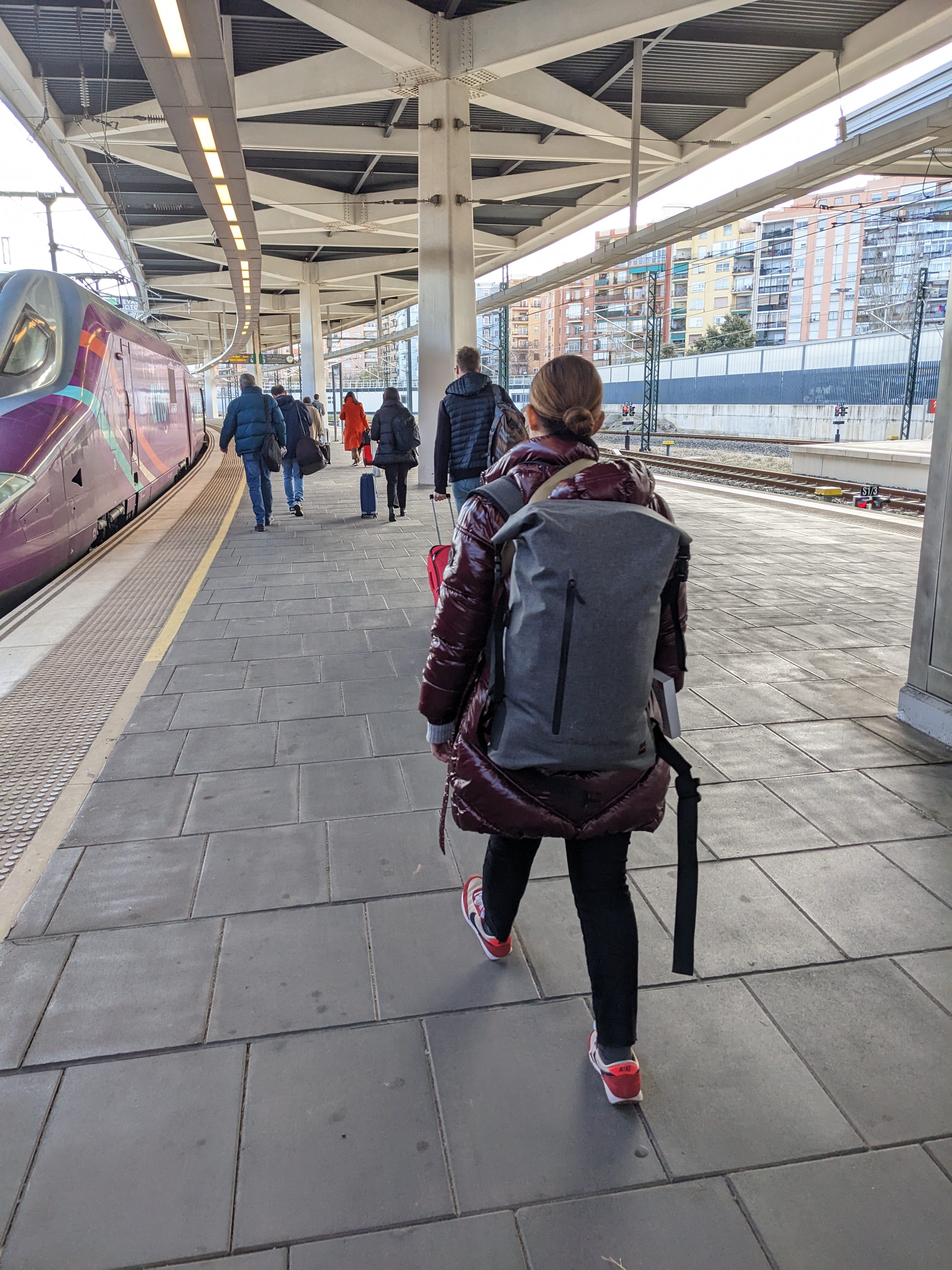

The doers.
The ones Best Wishes Olaf don’t wish it would happen or want it to happen but actually do it and make it happen