

One of the laziest things people say—and the multitudes repeat—about moving abroad is that the newness wears off.
Think about what that actually assumes.
It assumes the point was novelty.
Like buying a new car, getting a new phone, or giving a kid a new toy.
It’s akin to giving a child something they’re only excited about playing with for a few weeks or months. Adults like to say they got bored and moved on, but kids don’t get bored because novelty disappears.
The child sets the toy aside and starts playing with other objects in their environment not strictly classified as toys.
You see it all the time—like the other day in the plaza near our apartment. A bunch of kids were running around with a tree branch as bikes, balls, and other “toys” sat idle. The best moments on the playground are when it’s packed and nobody’s using any of the structures. Your kids are off in the corner playing footsie with a bug.
Children invent and reinvent within the settings and contexts at their disposal. They’re constantly cycling through their environment as the process of growth happens—seemingly—in the background.
When you move abroad—or do anything else that’s truly life-changing—you have to be that kid who craves a setting that allows them to live—to explore without restrictions. But you need the conditions that make a spare tire sitting off to the side every bit as interesting as a shiny new Playstation.
My wife and I didn’t move to Spain because we wanted to feel like we were on vacation forever. We didn’t move because we wanted to live permanently inside the honeymoon phase.
I called bullshit on the idea of a honeymoon phase before we moved and I call bullshit on it to this day.
We moved because we wanted ordinary life to require something of us.
We moved because we wanted to build a life that required us to keep growing—to keep challenging ourselves.
In fact, we challenged ourselves out of a good situation in Los Angeles. It wasn’t like life was bad there. We had it relatively good. We made the best out of LA.
We left because:
We both have some variation of the personality I described the other day:
All of this developed over time, but curiosity, movement, and reconstruction—for the most part—always remained constant.

A desire to know and experience what else is out there—not on a whim, but as part of a comprehensive outlook on life. One informed by watching other people turn their comfortable situations into stagnation and, in some cases, bitterness. I watched that process unfold one too many times among some family members and friends.
Some people stay put and leverage a comfortable situation—there’s not necessarily anything wrong with that. I see mountains of people I know crushing and truly enjoying life in LA and elsewhere around the world. But there’s a difference between the success stories of life in one place or at one job—between staying open and letting anxiety and fear close you off to the rest of the world, which you often end up just hating on.
Plus—in pure practical terms—if you want to live life without a car in an environment conducive to walking, biking, and taking transit in a society with much less hostility and superior social and physical infrastructure, you pretty much have no choice but to leave the United States for any number of other countries.
Again, it comes down to specific situations and tradeoffs—neither are the same across the United States, the world, or from one overthinking mind to another.
Taken together then, how in the world do you make a serious move abroad then fall victim to the honeymoon period?
I just don’t understand it.
I’m learning Spanish. I still suck, but I’m a hell of a lot better than I was when we arrived here to live 18 months ago.
I’m transitioning my career to one where I focus on writing about what’s happening in Europe—be it in my life, on the streets, or in finance. Out of necessity and out of a desire to evolve.
My wife is building a new career as a ceramicist. It’s the logical next step for an ambitious woman who helped build a successful business in Los Angeles and has the desire to put her common sense, sharp acumen, immense natural talent, and ability to learn fast with clarity and competence in a setting that challenges her every single day.
I’m riding my bike hard—in the city—almost every day. We’re taking the most demanding yoga and pilates classes of our lives four times a week. We’re setting up new systems and structures. The alternative could very well have been hitting a comfortable wall and not feeling like we had any reason to push through to the other side.
Then you decide what to do—if anything—and where to go—if anywhere—because you're thinking clearly rather than reacting.
That’s a realization you need to come to before it comes to you.
Only then does the question become: What does a good Tuesday actually look like?
This is what I do most weekdays—so, it’s a typical Tuesday.
Wake up around 7 or 8 a.m.
Make coffee.
Wake up my wife.
Work for 45 minutes to an hour.
Go the the municipal market.
Work for another hour.
Have coffee at a local café.
3-4 days a week either walk with my wife or take a bike ride—sometimes both.
Work for another couple of hours.
Run errands, such as the supermarket.
4 days a week—Bikram yoga or hot pilates.
Dinner, relax inside or outside of house, or both.
Go to be around Midnight.
The days are just longer here in Spain—especially in summer—and I love that.
Cities here are built for living morning, noon, and night.
That “schedule” is somehow—simultaneously—the most exciting and the most boring thing about my life.
It gets mixed up on the weekends with different flows. And—every once a while—travel gets thrown into the mix.
It’s boring, thrilling, and challenging all at the same time.
One of my most popular and misunderstood Medium articles—I think I’m going to call it my Born in the USA—is one where I think more than a few people didn’t read past the title.
Which ties directly to some of the simplest, but best lyrics ever written by an underrated songwriter known as Mike Ness of Social Distortion:
Well, I've searched and I've searched
To find the perfect life
A brand new car and a brand new suit
I even got me a little wife
But wherever I have gone
I was sure to find myself there
You can run all your life
But not go anywhere
Real boredom isn’t the absence of novelty. You don’t need novelty to grow—in fact, you’re probably better off without it. There’s no novelty in our Bikram yoga practice—26 postures, 2 times each, for 90 minutes every class—or in pedaling a bicycle. They’re effectively routines that produce physical and mental rewards and benefits.
A routine isn’t stagnation. It’s both the platform from which you do life and the proof that wherever you go, there you are doesn’t necessarily have to be a bad thing.
It’s the structure that allows you to become a little better at whatever matters to you—language, a career, your health, or just understanding yourself.
That’s why I don’t think moving abroad is something you do to “find yourself.”
That framing has always struck me as backwards—if not foolish.
If you hope and expect that another country will tell you who you are, you're asking geography to solve a psychological problem. You might get lucky. More often, you'll end up disappointed because no place—not Spain, not Japan, not Italy, not anywhere—is responsible for giving your life direction.
Before you arrive, there needs to be at least some idea of what you’re trying to build.
The setting can then make building that life more likely.
That’s a completely different way of thinking about moving abroad.
You’re not just looking for a country. You're looking for an environment where your ordinary days reinforce the person you’ve always been blending with the one you're trying to become.
At this point, I think the honeymoon period does more harm than good. It encourages people to expect the wrong thing from one of the biggest decisions they'll ever make. Every pro-move, pre-big life change masterclass that warns about the honeymoon phase leaves another person less prepared for their transition than they otherwise could be.
Mike Ness nailed it.
Ideally, you’re not running away from or towards anything that matters—and you’re definitely not trying to outrun yourself.
Learning a second language at 50—I’ll turn 51 this Saturday—is a lifelong journey. Same goes for careers, exercise, travel, and getting the most out of your daily routines.
At least it is for me.
And you don’t—you can’t—do these types of things within the confines and context of a fleeting period of time where the novelty and excitement eventually wears off. The honeymoon period in relation to moving abroad is a nonsensical oversimplification of epic proportion.
It reduces one of the biggest decisions you'll ever make to a phase instead of a way of living.
It treats building a life like a vacation.
It isn't.
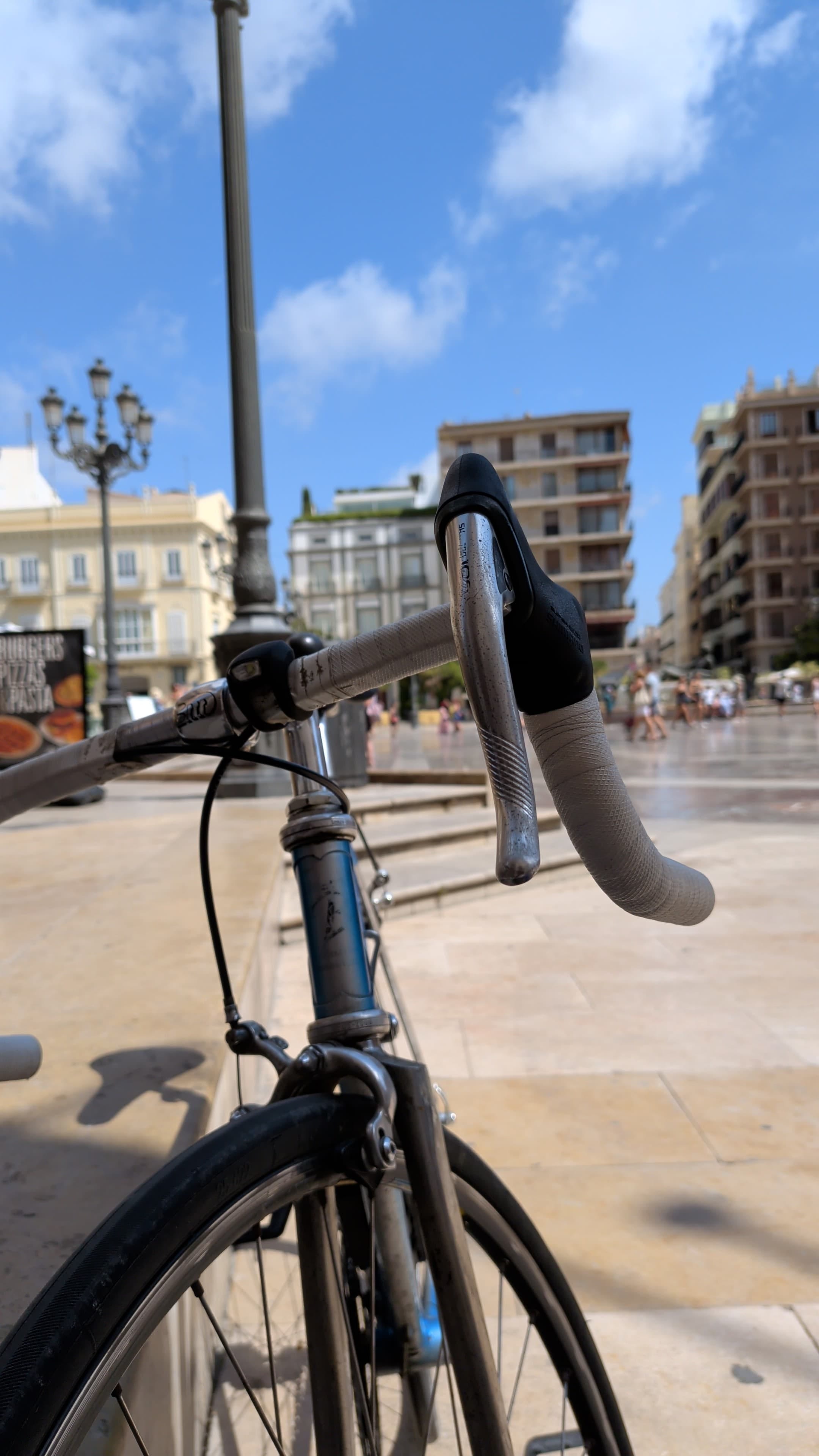
Those "boring Tuesdays" are often my favorite days of the week.
You described it perfectly!