Quality of life — no matter how you measure it — sucks in the United States.
Part of the reason why it’s so bad is because the nation has failed to properly define the term, opting to confound it with the runaway American dream.
I know because — once upon a time — I was one of the Americans who believed the myth. And now — living in Europe for nearly two years — I’m experiencing something completely different. But it’s not simply that quality of life is better here — in Spain and other parts of the continent.
Even without the comparison cases, America trained people to accept what much of the world would consider an unacceptable baseline of daily life.
The key components of the American way directly contribute to the cold hard reality that the US is going backwards while other nations around the world have seen the writing on the wall and are acting accordingly.
That’s what this article is about. How one thing — sadly, the centerpiece of American life — gave the country a perverted sense of what it means to live a good life.
I didn’t move to Europe and suddenly decide car dependency degraded American life. Moving to San Francisco in 1999, studying urban planning, living in Los Angeles, traveling, and eventually moving abroad shaped that worldview over decades.
What Europe changed was my perspective. The more time I’ve spent in places where everyday life isn’t organized around the automobile, the more clearly I can see what Americans have been trained to tolerate.
Car dependency is one of the clearest examples of how government policy, corporate interests, and American culture conditioned people to ignore and even proudly reject the ingredients for high quality of life. Reliance on the automobile — and the suburban development it enabled — helped put the United States in the mess it’s in.
Important side note: I was going to cite surveys showing that actual Americans think quality of life is declining or at all-time lows, but then I stopped. Because the core problem is that many people in the country have a warped sense of what quality of life is in the first place:
Quality of life is infrastructure.
It’s geography, transportation, housing, and public space.
It’s how difficult ordinary life feels on an average Tuesday.
A disturbing segment of the country still measures quality of life on the basis of how “nice” their car is or how isolated their home is from the city.
And that’s really the problem. For decades, politicians and citizens — on both sides of the so-called aisle — have really only been able to agree on one thing almost unanimously. And that’s that it’s a good idea to perpetuate a car-dependent, suburban existence as the country’s majority identity.
This national consensus on suburbia and/or the private motor vehicle — the one thing it seems Americans can come together on — hasn’t worked out so well.
The United States has fallen 14 places in the global Social Progress Index since 2011, declining in rank across every component the index measures. The EU passed it in 2019. Meanwhile, in The Wharton School’s 2026 Best Countries Index, European nations represent 20 of the top 30 countries on the quality of life metric. At 27th overall, the US is lowest among all G7 nations.
America remains extraordinarily rich. It’s simply getting less quality of life for the money.
In these conversations, many Americans like to bring up exceptions. That sort of misses the point.
I’m not arguing that there aren’t places where you can enjoy life in the United States. My life in California wasn’t hell; in fact, it was quite the opposite. In big cities and small towns, you can find and settle into your groove.
However, even in these places, the baseline quality of life is objectively lower across multiple measures than it is in many other parts of the world, particularly across Europe. Focusing on exceptions ignores the reality that when you prioritize cars—even in cities that also have relatively good public transit, walking, and cycling infrastructure—you create a wrapper around daily life that automatically degrades collective well-being.
The worst part about where the nation is at now is that — for decades — loads of smart people have been sketching the writing on the wall. They sounded alarm bells and not enough people — decision-makers or large swaths of the citizenry — cared, listened, or did anything meaningful about it.
The social-political environment has gotten so bad that when a candidate runs on ideas such as free public transportation, clean energy, or a living wage they’re branded by many as “communist” or an enemy of the state. What has happened to people that they go along with such self-sabotaging nonsense?
The alarm bells rang — and are ringing — in a ton of areas. I can’t discuss them all in one Medium article so I chose to focus on one of the areas I know and care most about — the automobile.
Car dependency taught Americans that it’s perfectly normal for a three-mile trip to require 20 minutes and be a sedentary pain in the ass. It taught parents that children shouldn’t be able to get around independently until they “get their license.” It taught older people that losing the ability to drive can mean losing access to a vibrant and fulfilling life. It taught us that streets can be hostile, neighborhoods can be dead, and seeing another person requires an appointment and complicated transportation.
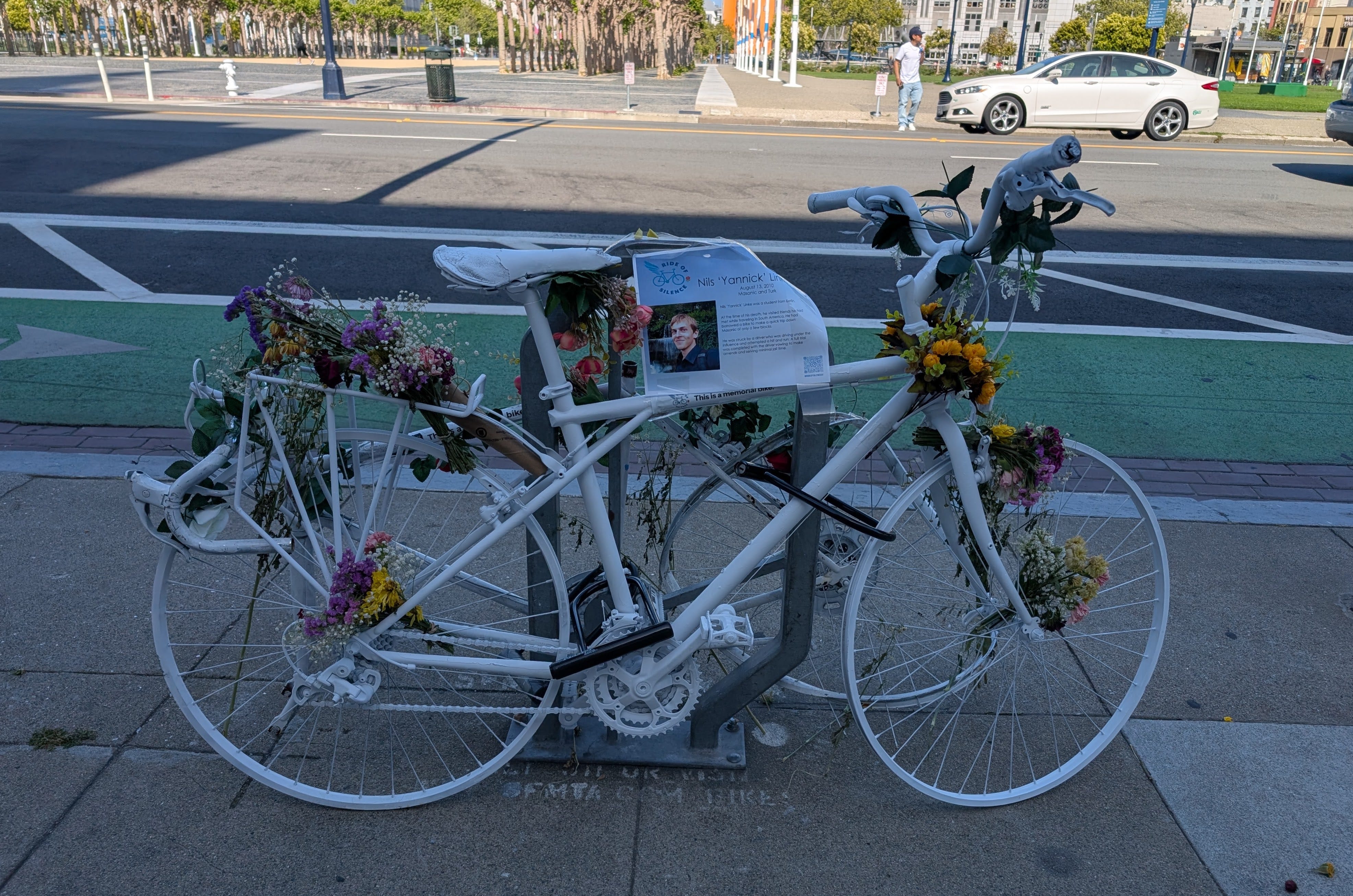
It taught us to accept tens of thousands of traffic deaths every year as non-negotiable cost of the American way. The automobile not only changed how most Americans get around, it changed what they’re expected and — unfortunately — willing to tolerate.
And then Americans started spending enormous amounts of money trying to replace what this form of development stripped away with bigger houses, bigger yards, home entertainment, home gyms, delivery services, second cars — private solutions to a public environment increasingly incapable of making ordinary life worth bragging about.
That’s why the rest of the world should pay attention. The tragedy isn’t as simple as The United States chose cars. Cars are useful. Even though I don’t have a driver’s license, I still use them several times a year.
What’s tragic is that America organized life around needing a car — and then spent generations mistaking the consequences for prosperity.
Eventually, a degraded quality of life stops feeling degraded when it’s the only one you know.